
Good things are overrated

di090718

Better to fulfill many small wishes than no big ones.  That’s just the beginning, but it is a beginning.

Misunderstand me right: I am not saying that we should not be grateful for the good things in our lives. I am saying that we should not be ungrateful for the good things we don’t have.

The human mind is a generator of desire. As long as it lives and is left to its own devices, the vital mind has no limit to its wants. If you were given a billion years to live and a benevolent fairy that would fulfill your every wish, you would not only be bored out of your mind. You would also end those billion years with as much desire as you had when you began.

I mean this literally. There is no end to our wanting, wishing, desiring and coveting. You may or may not believe that we humans are proportioned to the divine, to eternity and all in it. But do not doubt this, that our capacity for desire is at the very least greater than the visible universe. If every planet around every star was ours to do with as we wanted, we would still not be satisfied when the universe came to its natural end.

The human mind is like a wellspring that overflows with longing, and the human body is only like a cup to take that longing away. We just don’t have the capacity to keep up with our wishes: They always run ahead of us, like the headlights of a car or the rainbow ahead of those who chase it.

It is natural that we believe in fulfilling our wishes. After all, if we never did, we would be dead. We are the descendants of those who, through millions and millions of years, strived hard to fulfill their urges. Without doing so, they would not live and reproduce and eventually give rise to us. And even in our own lives, we learned early on that it helped to scream when we were hungry, and later to follow other needs with great energy. When our needs were fulfilled, the discomfort receded for a while, and we felt good. But soon some need or another rose again, and we had to take action again. Eventually this became ingrained in us, so that even when there was no need, we would look for some way to feel even better. When you believe you can have ecstasy, ordinary life is agony. Likewise when you are in agony, ordinary life seems like ecstasy. You think: If only I could have what I lost! But if you regain it, you once again forget it. This is human nature.

It is not necessary to run till you stumble and fall under the whip of relentless wishes. We can begin to trim off the excesses. For this to happen we need to calm our mind. Meditation is one such tool. If you are religious, you will hopefully also find help in prayer, chanting or other such activities. But in any case, my advice is to start at the top, to trim off the ludicrous excesses that are created by advertising and peer pressure. Become free inside, realize that you alone are responsible for your life, and that your choices will form it, not the judgment of others, least of all total strangers to whom you are as cattle.

There is much more to achieve. But it is already a great relief to shed the witless excesses caused by profiteers inflaming your desires. And I don’t mean just “adults-only” desires, although those are pretty good examples now that I think of it. But just as magazines for men alternate between underdressed women and relationship advice, so also magazines for women alternate between cakes and diets. They and their ilk create the problems they purport to solve. A simple life keeps the problems fewer and smaller to begin with.

The time spent chasing the ultimate happiness could be spent in a pretty high state of happiness that lasts for a much longer time. The ultimate happiness will elude you anyway, because the human brain is not able to sustain ecstasy for long. This is why even the fulfillment of the mating urge, so intense because nobody would do something so insane without a hefty reward, still lasts for such a short time. But the “penultimate happiness”, the joy and contentment that is not taking your breath away but is still really good, can be sustained for a long time. Such joy and contentment is cheap and readily available. If you do easy, fun things and help other people without getting paid for it, you will be much happier than if you struggle to get everything you want. This is attested by those who have tried. I have yet to meet anyone or hear from anyone who reduced their selfishness and regretted it. And I have yet to hear of anyone saying on their deathbed:I wish I had paid more attention to advertising.”
Conceit

di090530

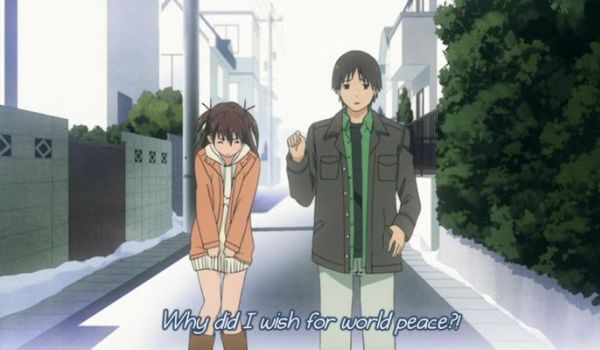
Why did I wish for world peace?

Conceit is a constant problem for those of us who have any spiritual aspiration. It may be that you are immune to it if you want nothing more from life than animal pleasures, but who would want to live like that? It is certainly not a trade-off I would even consider.

Let us take the example in today’s illustration picture. It is from the anime Hatsukoi, which means “first love”. The picture shows a brother and sister. The sister’s first love is her brother. Although there is no actual physical incest, parts of her behavior is more fitting toward a boyfriend than a brother. This embarrasses him deeply, as he has the social antenna she lacks. In this picture, the two of them are on their way home from the temple. As is common during New Year in Japan, they have visited a local temple, said a prayer and bought a reading of fortune for the coming year. On their way home, they meet a girl the brother likes. His sister gets jealous and tries to make a scene.

“Why did I wish for world peace?” The prayer was well intended at the time, but actually none of them has personal peace. On the contrary, they live in a situation that, if unresolved, threatens the stability not only of their own future but of the tiny corner of society in which they live. This should be their priority, surely. There can be no world peace separate from the condition of the actual humans. As we say here in Norway: When you see two children share a bottle of soda, you know why there is war in the world.

It need not be so far-fetched as the story above. Conceit is more or less the human condition. I certainly know this from my own experience. Ever since my youth I have frequently been preoccupied with things I don’t quite understand, things that are too great and mysterious for me. To some extent I think this is how it must be, for our eyes are always on the things ahead, kind of like when driving a car or a bike, the headlights are always ahead of us and not shining down on the road right below us. But I have some exceptionally strong headlights, I guess, or perhaps it is more like the biblical proverb: “The eyes of the fool are at the ends of the Earth.”

For instance, what could possess me to believe that I could say anything meaningful about conceit? Even after years of practice, I still only understand it dimly.

The awakening society

di090418

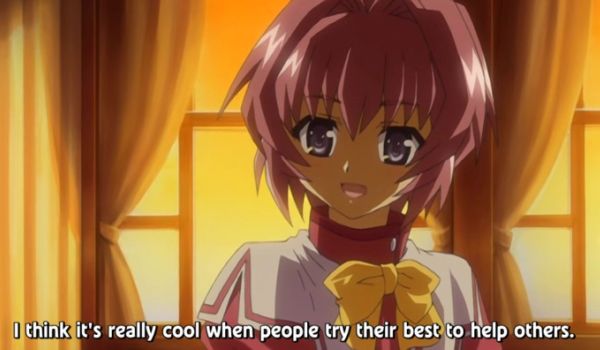
I think it’s really cool when people try their best to help others. (Instead of, say, watching anime all evening…)

Awakening, Enlightenment, Higher Consciousness – we tend to associate this with hermits, Zen monks and New Agers going “ooommm”. Awakening to higher states of consciousness is indeed a very private, personal thing. But consistently living at a higher level of consciousness has consequences for those around us, as has living at a low level. What would happen if the average citizen put a little more “ooommm” in their life?

I am not proposing that you do this instead of caring for your kids or earning your own living. Rather, that one takes some time from watching TV (which is usually actively harming the mind. ) The television keep you in a constant state of moderate stress with its frequently shifting images, while you are helpless to influence what you see. This wears down your body and brain. Meditation is a scientifically proven anti-stress. Or you could choose any other “sitting practice”, such as prayer or lectio divina (holy reading) if you are religious (which is not as bad as it looks – the guys on TV are not representative of real religion). For those fearful of both religion and mysticism, at least set aside some time each day for contemplation of beauty, whether it is a piece of visual art or a timeless musical composition. The scientifically inclined may want to experiment with brainwave entrainment.

Meditation and other “sitting practices” make you more aware. Biologically, they reduce stress and restore natural rhythms to the body. Mentally, they calm the frenzied churning of the mind so you can think and feel more clearly. Subjectively, the constant “now” that we live in seems to expand, infused by eternity. But what about the social dimension?

First off, the growth in awareness is not something new and magical. All of us have grown in awareness through our life. We started as a purely biological parasite with no awareness whatsoever. We gradually became aware of ourselves and the distinction between self and (m)other. Then we grew in awareness through many years of play and learning, a time of great confusion that hopefully lessened as more of the pieces came together. When we grew up, we learned to think beyond the purely selfish and beyond the moment. You can say our circle of awareness expanded in space as well as time. This process continues in some adults, and they become mature. Others don’t.

The acute problems in any society comes from those who are severely lacking maturity. The rank and file criminal falls squarely in this category. Unable to think beyond his selfish wants to empathize with others, unable to see the consequences of his actions in future time, he acts without forethought or afterthought, tossed by the waves of his excitement and the manipulations of others. Their severe lack of maturity is seen in their toddler-like sense of entitlement.

But crime is not the only fruit of low awareness. Unreflected sexual behavior brings broken hearts and unloved children, not to mention the spread of diseases ranging from nuisance to slow, painful death. Impulsive shopping causes shortages further ahead and sells us into varying degrees of slavery. It is also one of the biggest sources of family tension. And it destroys the environment by squandering resources and overflowing the landfills with yesterday’s shiny things.

In our social life, lack of awareness and maturity quickly gets on other people’s nerves. Those who are more mature think we are idiots for being whiny and self-centered for no reason. Those who are not more mature still think we are idiots, but because we hog the spotlight and don’t realize that they are the center of the universe. While having common enemies may still keep us together, deep and lasting friendships are hard to maintain unless we have grown to care about others and give them room to be themselves. Instead we get dysfunctional pairings between the needy and the intrusive, or between the martyr and the persecutor.

These pairing frequently form the basis of family life as well. But while an immature person may be great fun in the bedroom, they are that much more vexing elsewhere. And the worst of the horrors is an immature parent, which brings the madness on to the next generation, distorting their tiny minds and making it hard for them to grow and mature naturally themselves. Luckily some in each generation manage to find other role models, or we would have been doomed to an endless cycle of madness.

Now, it would be cool if we all reached Satori, Nirvana or whatever your name is for the ultimate Enlightenment. But my claim is that just a little more awareness would do a world of good. For the criminals, this would unfortunately have to be enforced from outside. But the rest of us have the choice to set aside a little time on a regular basis to work on our consciousness. And it is the regular practice that does it, even if it is only a little.

What would life be if people were a little more mature? They would be calmer, not showering you with their stress like a wet dog shaking itself before you. They would be happier, more content and grateful; instead of whining so much, they would smile more and be excited about opportunities for themselves and others. They would be less selfish, more willing to share, more trustworthy and more willing to trust others. They would have more friends and fewer rivals. They would be wiser, managing their time and money better. They would show up in time and not having to run off in a hurry; they would live simpler lives and have a little time and money to spare for those who actually need a helping hand. They would not be quick to judge others, but on the other hand they would be able to admit their own mistakes and even apologize and try to make things better.

Life in a more aware society would not be paradise or utopia. While meditation and wisdom may protect against many accident and illnesses, eventually we all sicken and die. Finite resources would still be finite, even if we used them more wisely. There would presumably still be earthquakes, hurricanes and tsunamis. But everyday life would be a lot better than it is now. And it is pretty good now compared to how it used to be. There is nothing that keeps us from making a better world for ourselves and your children. Nothing but our own excuses.

Golden rule rules

Since it is official Jesus Day today, in memory of him teleporting out of the tomb and saving the world (how’s that for comeback), I thought I would say a few words about the Golden Rule. After all, Jesus made it famous. There are similar sayings from other people, or so I have heard, although I have never heard who. The Silver Rule (don’t do it to others if you don’t want them to do it to you) was around in the same area before Jesus though, and is generally something small children learn the hard way.

Anyway! It has come to my attention that some people think the Golden Rule is not perfect and we need a “Platinum Rule”. While I’d say Kant may have been on to something with his proposal that we should live so that our actions could be used as a universal law, that is a bit too wide to be practical. Most of us don’t know much about the universe and its morality, but we know what we’d like others to do to us. So we can do that to them.

Now the latest criticism I have heard is that we should do to others what THEY want rather than what we want. Uhm. Yes, dear reader, this is what happens when people think Jesus was some kind of barbarian hick who couldn’t think as clearly as they can – even though they obviously don’t even have the wisdom of Solomon. If they had, they would not have made fools out of themselves. (And I don’t mean that in a good way, this time.)

Let me illustrate this by example. Let us say that you really like grilled cheese sandwiches. Really, really like them. According to the Golden Rule, whenever you have guests, you would serve grilled cheese sandwiches and nothing but grilled cheese sandwiches, right? Because that is what you would want them to do when you visit them.

But wait a minute! One of your neighbors has this thing about hot dogs. He really, really likes them. Or so it seems, because every time you’ve been there, he has served hot dogs and nothing but hot dogs. Even though you have tried to speak to him at length and in great detail about the glory of grilled cheese, he just doesn’t take a hint and keeps serving hot dogs. He simply ignores your opinion completely, and you don’t like that at all. Did you hear that? So don’t do that to him!

We definitely want other people to consider our needs, and within reason also our wants. Therefore, the Golden Rule commands that we do the same unto them. How hard can that be to understand?

The Golden Rule grows with you. Just because you interpreted it in a childish way does not mean this was its only meaning. No matter how much your awareness expands, the same principle still applies. You want others to live a life that can serve as a moral guideline for the world? In that case, it behooves you to do the same.

That’s all, folks. Or at least it is Moses and the prophets.

Why public libraries?

di090404

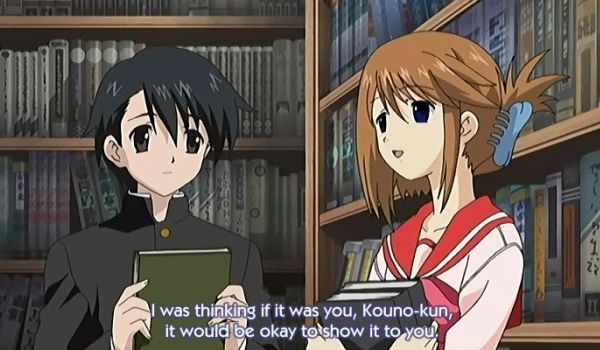
That was perhaps not what he expected her to show him, but even so, there are many good things to see in the library.

No, I am not trying to make an end to them, although I suppose that is what would happen if people started thinking. (Because when people start thinking, they usually stop soon.) Every civilized country has public libraries, even that bastion of capitalism where you are otherwise supposed to earn your own way through life and where copyrights just go on and on for generations after the author’s passing. So why?

“Why” can mean “what was the cause” or “what is the purpose”. For the current libraries, the cause is probably that there have always been libraries, or at least for so long that people have forgotten their purpose. But the purpose certainly seems to be to let people read books for free.

Now there are two ways of reading library books: Either at the library, or you can borrow them home with you. If you borrow them, you have to return them after a few weeks. But there is nothing to stop you from coming to the library every single day and read the same book, unless someone else has got to it first. So clearly the purpose of returning the books is not to limit access to reading, but simply to keep the costs down by letting many people read the same book.

Enter the Internet. I know I have written about this before, but it is so long ago that perhaps I am saying this in a different way. Or at the very least, since then Google has continued to scan millions of books from around the world. But I know I said the same thing then as now: If libraries had been invented now, they would have been forbidden. If we had known the value of reading today as we did when it was new, they would be freely available on the Internet.

Now you may argue that if people can afford Internet access, then they can also afford to buy their own books. This is less and less true for each passing years, as computer and internet access become cheaper and cheater and more and more fundamentally necessary for a normal life – while books become more expensive if anything. But it is also a moot point from the “Internet=library” point of view. In all the years I used public libraries, I never had to present documentation of my poverty. It was probably assumed that if I really loved a book and had the money to buy it, I would.

Certainly this is the assumption of Baen Free Library. In fact, they claim on the very first page that they expect to make money of it, both the publishing house itself and the authors who participate. Ironically, such a transparent self-interest may deter some who would otherwise have acted in sympathy, but it is the more commendable for honesty. As Flint – himself an accomplished writer – says, what author would not be happy to see someone checking his book out of a public library? There may be such cretins, says Flint, but their books probably would get little love from those who got a chance to break them open before buying them.

(Incidentally, the music “pirates” have argued along the same line for years, but their pleas fall on deaf ears. Seriously, how many CDs have you bought without having heard at least one of the tracks beforehand? The notion that radio stations should pay to play music rather than getting paid for it is utterly, clinically insane. It is as if newspapers should pay to print advertisements. Of course, with modern file sharing technology, the advertisement IS the product. A golden age of opportunity has passed for the recording labels. But if the experience of Baen is anything to go by, the recording companies are still shooting themselves in the foot. Or, as a Norwegian commenter put it, shooting their prosthesis, as the foot is shot to pieces long ago.

Then again, perhaps books are different, appealing to the more intellectual in particular. (Although, if you randomly sample a bookstore, it is hard to give credit to that theory.) In any case, if free books in the library are a good thing, then free books on the Internet should also be a good thing. In fact, since most people still find reading paper easier than reading computer screens, people are unlikely to commit the crime of reading books just to taunt the authors or publishers. Their motivations are probably at least as good as (or at least stronger than) the average library visitor.

It is no big surprise that the US government prefers to let Google do the job. But it is rather amusing (in a scornful way) that the social democrat countries of Europe are unwilling to build good public libraries on the Net. Especially if you have a language different from the emerging World Language, your only realistic hope of delaying its death is to throw at your public every word and sentence available in the local tongue. In fact, you should probably pay them to read if you value your national heritage so much.

Anyway, I’ve already mentioned Baen, a pretty limited initiative. I’ll also remind you of Questia which is a partly free and partly paid library, with a particular angle toward students and the academia. But the tidal wave that may eventually absorb the phenomenon of books into the bitstream is Google Book Search. Despite the unassuming name, Google has scanned and stored literally millions of books, some of which can be read in their entirety or even printed out. (Please, think of the trees!)

I can’t say I mind too much that governments make themselves less relevant. The time is drawing near when governments as we know them will come to an end. The next level of consciousness will have no need for such structures, but will cooperate seamlessly like members of one loving family. It will probably not be in my time, more’s the pity. But all things will either change or end, most likely within this century. The age of books is also coming to an end, but not because we throw them away. Rather, they become drawn into the noosphere, and like ourselves they become gradually less physical, less confined in space and time. Our fates are linked, for without the books, our cultural evolution would have been incredibly hard or perhaps even impossible. The world we know, we owe to the book. In some form, it will always be with us, until the end of the world as we know it.

Awareness revisited

di090329

You won’t understand yourself in just 15 years – and probably not even 33, barring divine incarnation. But over the years, we catch the occasional glimpse of ourselves, and of the world, without the heavy curtains of habit, prejudice, custom and common assumptions.

(I wrote this post earlier this month but can’t see I have posted it before.  I probably felt that I was not worthy to write about such things.  I still am not, but we must say all the words that should be spoken, before they are lost forever.)

I know I wrote about awareness last month, but I think it is worth visiting again. I remember how little I understood – and how much I misunderstood – about it myself for most of my adult life.

Take the connection between awareness and intelligence, for instance. There is clearly a connection. People who are more intelligent tend to be aware of more things at the same time. (A positive correlation, as my high school teacher would call it.) This is most noticeable when people are severely lacking in the top domain, so to speak. They can be blissfully unaware of the effect they have on others, or of the consequences for themselves of what they do. There are also other small effects, like bumping into people and objects because they are looking another way or thinking of something else.

But then again you have the distracted professor stereotype. It is not all fiction, either. I have seen it firsthand. And to some degree I have been that way myself. Not quite the type who puts jam in the tea, and I have mostly had excellent situational awareness, but nobody would call me practical. Let us agree that I have a very low dust awareness, to put it that way. And my social skills were abysmal for most of my life. Then they improved. (And then I stopped being social at all, but that’s a slightly different matter.)

Experience plays a role in displayed awareness: When we have done something often enough, we no longer need to think consciously about it, and can move our awareness to other areas. It will look as if we are more aware, but in this case that is not necessarily true. It can be, however, if we use our newfound freedom from details to expand our view and take in a wider perspective. We can get an overview that integrates different things we were aware of separately, but were not aware of their connections.

But often experience causes us to become less aware, creatures of habit. There is actually a default network in the brain, a connected circuit of parts, and it works diligently to keep our awareness down, or so it seems. Our lives get automated, and when we have free time, this “default network” will immediately present us with some mind task that can distract us: Memories, plans, daydreams and what-if scenarios. That way we don’t need to be present in the moment and notice the world or, even worse, our own awareness.

(A small voice in my head says that I may be over-biologizing here. If this default network was The Enemy, any number of people would become Enlightened by falling and hitting their head. More likely this is a necessary part of the brain that just happens to pick up the slack when we don’t use the slack for other purposes.)

This is peculiar, indeed: There seems to be a process that slowly increases through life, removing our awareness, making us function more and more automatically. This is widely regarded as the reason why life seems to speed up as we grow older. Where once a summer vacation was interminably long, now entire generations swirl before our eyes and are gone, and then it is over, and where did the years go?

But even for us who have vowed to not kill time, for it is our life – even for us, the same mechanism is lurking within. To expand awareness is to swim against the current of time itself. The strange part is that it is such a simple, easy, even pleasant thing to do, and yet we don’t. We shrink back.

I still think one of the best descriptions of this conundrum is the Norwegian song “Floden” (The River) by Bjørn Eidsvåg, which I referred to on November 24th, 2006. (Is it really that long ago? Where did the years go?) Having still not heard an official English translation (please comment or mail me if you know one) I shall simply repeat my own near-literal and none too lyrical translation from back then.

Each time I dare to bathe in you, I become whole and clean;
and I feel a healing shiver go through marrow and bone.
I wonder now, why don’t I bathe more in you?
Why, why, when I feel the good you do to me?
It can almost seem like I try to avoid you
and am horribly afraid of the grace and joy you give me…
Peculiar, peculiar!

Yes, each time we reach into higher awareness, we feel almost instinctively that it is a good thing, we realize that this is how life was meant to be lived, we feel it rebalance our body and soul. And yet at some point we shrink back, driven by a fear we cannot explain. I believe this is a guard that is set around us to keep us from going insane. Think of consensus reality as an island we all live on. If you go off the deep end, you leave behind everyone and everything you have in this life, and you better have a really good reason for that!

So what I try to do is extend consensus reality a little bit at a time, here on the shallow end. To become a little bit more aware of what I do, what I say, what I feel, what I think. A little bit more aware of my motivations, of my mortality, and of the fact that not everything is about me. More about the things that are not about me in the future, if any.

For now, let me assure you that Ken Wilber and his book-writing friends are adding their voice to the unlikely choir of Jesus, Bill Harris, the Buddha and me, urging you all to watch and wake. (Although doing so might deprive both Centerpointe Research Institute and even the Integral Institute of some customers, I think. Eventually. I suppose theoretically some readers may even outgrow the Chaos Node. Nah…)

I did not know

di090322

By special skills in this case is meant knowing what ingredients go into dinner, and where to buy them at the best value.  There are a lot of special skills like that in a life, and some even less obvious.

I poked around on the Net again, and found a lot of articles on credit cards and such things. There sure is a lot to know about credit. What to do, what not to do, and what happens if you do it anyway. Of course this is not only so for consumer credit, but many other things in life as well. I have picked up some of it over time, but other times I have just been lucky, it seems.

In all fairness, I was what people call a “country bumpkin”. As a young adult, I knew enough about farming that I could probably have taken over a farm and fed a family, if the world ended with me. I knew that much less about all things urban, I guess, despite high school and a couple years of mercantile school. We learned various things from bookkeeping to photocopying (not as easy then as it is now), but we did not learn all that much about everyday economics. Or everyday anything, for that matter.

What I am trying to say is that I was very much mistaken back then, thinking I was an adult. I was old enough to drink or drive, marry or serve my country in unpleasant ways. But I knew very little about life and very little about myself. What a boon it would have been for me then to have my current me around. Even if young me probably would have understood only part of what middle-aged me said, and would not have the wits to even ask the right questions, it would still have been a great help. Or so it seems. Since I did not have such a person, I must assume that in the universal Grand Scheme of Things it was all for the best that I sniffed my way through the world on my own. But in principle, it would have been nifty to have someone around that was not amazingly ignorant about everything from constipation to credit cards.

One thought that struck me was that perhaps young people would be better served to live with their parents for the first 30-40 years and listen and obey them. But that would not have helped in my case. No offense to my parents, both of which were amazing in their own way, but they had lived in a world that was fading. Unfortunately, that is the rule now. If I had children who were young now, much of what I knew would be about a past in which they did not live, nor ought they to. (They would probably think I was living even more in the past than I am, as young people generally think, but there would be something to it. Quite a bit probably, and I am a pretty cutting edge guy compared to most people.)

Things have gone fairly well, given the abyss of ignorance and (particularly) ignorance about the ignorance. I credit my invisible friend, of course. But even so, I can’t help but think there must be something we can do to “hand down” essential life skills more advanced than potty training. (Actually even potty training often seems to go horribly wrong, but let’s leave that off for today.)

This entry is so unfinished, it does not really have a conclusion. I am not really sure what people can do to get life wisdom before they have already made all the mistakes that give people life wisdom. I suppose you could read the rambling journal entries of middle-aged men, but I’d like to think there is some better way somewhere. Perhaps if I could ask my 75 year old self, he could tell me. Of course, there is no certainty there will even be a 75 year old self – especially without his sound advice on how to survive that long…

Blessed are the lower middle class

di090321

You could for instance get a chess board and have years of fun with that. Or get Sims 2 and have years of fun with that, I guess.

“Lower middle class”? Actually, the founder of Christianity famously says, “Blessed are the poor”, but it’s not like anyone would believe that. I mean, if they don’t believe Jesus, why would they believe me? Actually, I am not sure about it myself in the most literal sense of poverty. Today’s headline, however, I’m pretty sure of. From personal experience, actually, but I hope I can also argue a bit more broadly.

First, affluence is relative. You may be just above the poverty line today, but by the standards of a hundred years ago you would be privileged indeed, and that’s before we factor in all the stuff that did not even exist back then, from antibiotics to the Internet. And even today, the lower middle class in Europe or America is rolling in dough as seen from parts of the developing world. The reason why people are still frustrated is largely that they compare themselves to the rich. This is no surprise, since the rich get a lot of media coverage.

Actually, that was my point number two, and possibly the most important. A lot of suffering comes from envy. Often it is not so much the money we want, but the status. This is an unfortunate side effect of how the primate brain works. It was made to function in small packs or tribes, where your status within the group was essential for at least two reasons. One, if food became scarce, the alphas would get to eat first. If your status was too low when the dry season set in, you could face starvation. In that case you would probably not pass on your genes and become my ancestor. Two, mating rights! For males, this would often manifest in quantity (and still does, just ask football or rock stars), for females in quality. So we inherited both the genes and the culture of those who kept reasonably close to the top of the pack.

Luckily, the food supply is no longer a problem except in the poorest countries. (Actually, too much food is more of a problem.) And even mating rights are not what they once were. People have a lot less kids anyway, and the kids tend to survive even if they are not able to wrestle cave bears at the age of twelve. If you really are obsessed with spreading your genes, you should probably raise your kids as deeply religious in an old-fashioned faith. It is certainly far more effective than having sex with pro wrestlers.

My point is, the motivations for staying on top are no longer valid. In fact, to the outside observer it looks quite a bit like the old farmer who tried to give his tractor hay. What was a perfectly rational behavior in the past can be perfectly crazy in a new and different age.

So what are you supposed to do instead of chasing status? Basically, become happy. There is a young science of happiness, which you may want to read up on. But basically it boils down to this: Don’t stress. Don’t expect any particular event (like a promotion or even a marriage) to create lasting happiness. Forgive people. Spend some time regularly helping others who are less fortunate than you. Do this and you should already be a long way toward lasting happiness.

I will also mention creativity. Whether you believe humans were literally created in the image of a Creator, or that the emergence of creativity marked our transition to true humans from merely smart apes, it should be something to celebrate. Given that we don’t actually need to impress anyone (status, remember?), why not find some way to express your creativity and go for it shamelessly? Drawing, painting, writing fiction or poetry, perhaps even some kind of craft. There are many activities that are not expensive at all, but can give you as much enjoyment as you pour time into them.

Whereas I personally see creativity as a subdomain of spirit, I also recommend taking up a spiritual practice such as meditation and/or prayer or chanting if you are religious. You may already have thought of meditation under the “don’t stress” part, but it is more than that. It is a chance to get hands-on experience with spirit, whatever that is. Your ideas about spirituality and religion may have been formed by more or less random events: By your parents, teachers, high school crush, things you saw on TV. You then pick up support for what you already want to believe from obvious sources, but how much experience do you have personally?

Timelessness takes time, as Robert Godwin so often says. In this at least there is no doubt he is right, as anyone can find out for themselves. You may find a crack in the cosmic egg, but then comes the laborious process of widening it. You may find a wellspring of grace, but then you dig deeper. You may find a stream of consciousness, but then you try to follow it towards its nonlocal source. Contrary to popular belief, life really is short. Eternity is long. Finding a piece of eternity in time is an extreme treasure.

Don’t get me wrong: You should definitely feed and clothe your kids rather than leave them behind while you run off to India to chant “Hare Rama” in an ashram. But there is no need to keep up with the neighbors. The neighbors are probably trapped in the knuckledragging Ice Age mentality anyway; it is no surprise then if they are better at dragging knuckles than you are.

Before you choose a path that promises lots of money but leaves you no time to help others or find your own still center, please give happiness a chance! If you don’t like happiness, you can try more money later.

Misanthropic principle

di090310

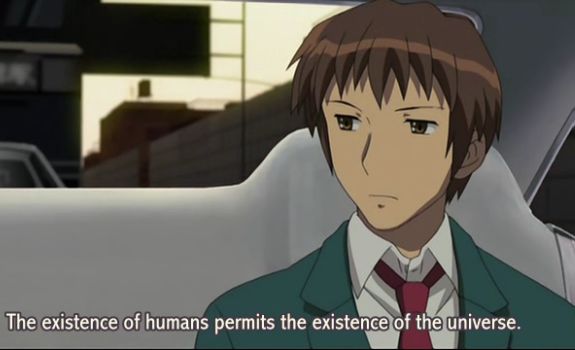
Even Japanese teenagers are somewhat familiar with the anthropic principle, it seems.

You may be familiar with the “anthropic principle”, the notion that the universe seems to be suspiciously ideal for human life. If only one of the many cosmological constant had been a tiny bit different, intelligent life – or even life at all – would not have been possible. There are just so many things that must go right for us to be here.

While this was not its original purpose, the anthropic principle has been cited as a reason for theism, the belief in one or more higher beings that created and/or guided the universe to this state of being.

In contrast, atheists generally cite the reverse anthropic principle: If the universe were not fit for intelligent life, we would not be here to talk about it. There could be trillions of uninhabited universes and we would never know, since we could not live in them. (In fact, many cosmologists take for granted that there are a huge number of universes just for this reason, that it would be extremely unlikely that the only universe ever was one that harbored life. Others say that this multiplies entities beyond necessity, thus falling foul of Occam’s Razor.)

The original misanthropic principle, I believe, is that “danger and death is necessary for intelligence to evolve; therefore a universe with observers is necessarily a scary one.” However, I use the phrase in a more playful way, to illustrate the attitude in this little verbal sketch:

Alice: Bob, I experienced a genuine miracle!
Bob: There are no miracles, just more and less likely events.
Alice: Wait till you hear this. I was on a passenger flight yesterday, and suddenly our plane exploded more than a mile up in the air! I was thrown out as the plane broke in two, and plummeted toward my death. Then suddenly I crashed into an eagle, and it broke my fall a bit, but of course not enough. Just afterward, however, I hit another eagle, and another, and another. This continued all the way down until I landed safely on a bed of moss. It cannot be anything other than a miracle!
Bob: Let me just ask you one thing. If you were dead, would you still be telling me this?
Alice: Of course not!
Bob: See? Since you are here, it was not only likely, it was downright unavoidable! There is nothing mysterious about it at all.