Craziness and/or religion

Is the monster inside you growing bigger and bigger? Religion can help! Probably. At least some religions.

Some time ago said something impolite but true: People are stupid and crazy. By this I mean that throughout history, or even today, most people are not very bright, and not entirely sane either.  Even in our enlightened (?) age, there is hardly a soul that does not harbor some phobia or addiction or obsession or fetish. For some of us, these don’t hamper us much in ordinary life, and tend to diminish over time. (Or we outgrow them.) Not everyone is so blessed, though: Many people live in severe suffering even if they don’t have bodily pain.

I believe we should see the world’s religions in this light. To refer to one of them, there is a story of some people who were entrusted fairly large amounts of money while their boss was abroad. Unfortunately, one of them buried his part of the money, then dug it back up when his master returned.  This did not go over well:  “Why didn’t you at least place your money in the bank so I could get it back with interest!”  One interpretation of this is simply:  If you don’t know what to do, listen to someone who knows better than yourself.

Organized religion is basically some people recognizing that there are others who are saner than themselves, and taking their advice. (And then someone finds a way to make money from it. But let us skip that part today.)

So basically, people don’t become stupid and crazy from religion. Rather, they are already so stupid and crazy that they see their religion as an oasis of insight and peace by comparison. This holds true even if the religion is rather disturbing as seen by a more enlightened soul.  For instance, it is unlikely that anyone goes to listen to Reverend Jeremiah Wright with the thought: “I need to dumb down, I need to become more crazy. This guy should help.”  Rather, if they feel affected that way, they are unlikely to ever come back. His regulars are people to whom this guy is a paragon of sanity.

The same understanding applies to history. Old religions, such as the first books of the Old Testament, contain some pretty bizarre stuff. Like the commandment to kill any couples that have sex during menstruation, to take a well known example. If you think that’s bad, keep in mind that to sentence someone to death Moses required two or three reliable witnesses, that is to say adult men of good repute.  The notion that people at the time lived in a society where unfriendly adult men of good repute witnessed your menstruation and your sex is rather more disturbing than the law itself.  In what kind of bizarre world would this be a problem in the first place?

The world really was bizarre back then. High school history books don’t go into this, which may be for the best concerning the stability of mind among their readers. But civilization back then was a new thing and was basically still experimental. Like a beta version, you know. Not very refined, lacking features, and prone to crashing.

There are several such seemingly absurd passages in old religions. God hates shrimps? Cows are holy? Or oaks? Blood from heifers take away sins? And yet we can have confidence that to people at the time, these doctrines were a great relief from the craziness that was tumbling around inside their heads. “OMG there is a cow, is it evil? What is the purpose of cows in the cosmic order of things? What will happen to me if I don’t find out?”

What is considered crazy varies not only with the times but also somewhat with geography. For instance I noticed this while reading the recently translated book Change Your Life, Change the World by Japanese author Ryuho Okawa.  It contained much general spiritual reflection and modern, sensible ethical advice.  It also included a couple paragraphs about how souls of aliens from the Pleiades had recently begun incarnating in human bodies and would prepare for the upcoming mass immigration from their home planets of aliens in physical form.  Then the usual exhortations toward love, wisdom, self-reflection and progress resumed.  I can only assumed that this must be unremarkable to the Japanese audience, where Mr Okawa has numerous bestsellers and is consulted by leading politicians.  (A recent prime minister there, by the way, was called “the alien” by his friends, and his wife had been abducted by Venusians.  Neither of these were part of his decision to step down recently.)

So, religion has been a steady influx of sanity in a world where complete hysteria was the usual order of the day. It still is, but an increasing part of the populace is getting more sane than their priests. Thank the Light for that! So does that mean we should abandon the concept of organized religion and leave it to the shrinks to clean up the remaining insanity?

Well, as an individual, you should probably not stick with a religion you consider less sane than yourself. But in that comparison, don’t be too quick to overestimate yourself, as people often are. If you are still unable to control your body when influenced by anger or lust, fear or disgust, then you’re still in kindergarten and need to work on your sanity.  The fact that some insane behavior is common in your culture does not make it sane.

For instance, we are aware that phobia – irrational fear – is not quite sane. But pretty much nobody thinks of the opposite, irrational lack of fear.  Here in Norway, for instance, it is quite common to fearlessly have unprotected sexual intercourse with white people. We are also adopting the American way of eating (huge portions), without fear of the unpleasant lfiestyle diseases that follow. Taking some advice from old-fashioned religion could have prevented all of this “quiet insanity”.

That is not to say that religions should not upgrade themselves. They have certainly done that before. Whenever you run into one of those people who get obnoxious about how the Bible is God’s Unchanging Word, just ask if you can assume that he really does greet the brethren with a holy kiss, and literally wash their feet. Chances are he does not, because no matter how much it is God’s Word, we quietly ignore it when it gets icky. Or insane.  This was a natural process until recently, when some people – mostly in America – regressed.  Contrast this with St Augustine, one of the church fathers who lived around the onset of the Dark Ages. He rightly argued that the pagans would think we were fools if we interpreted the Book of Genesis literally. This is still sane advice. Certain other religions could have something to learn too.

I am still not convinced that we’ll increase the sanity factor of religion by including UFOs though. At least not here in Europe. (Your UFO experiences may vary, in which case you may want a religion that has a clear view on how to deal with extraterrestrials.)

Religion and/or insanity

If you cry because you did not understand other people’s feelings, it may be repentance. If you cry because other people don’t understand your feelings, it is more likely depression.

My only curious reader (I can see on my bandwidth log that the rest of you are out there, but evidently not curious enough to comment or mail me) has another question worthy of a small essay.

How do you tell the difference between a religious/spiritual experience and insanity or a hallucination?

First off, hallucinations are optional. There are certainly people who see lights or shapes or hear voices from beyond, but these are just the form their revelation clothes itself in. You just said it was a spiritual experience, right? Our senses are not our spirit, even in ordinary life. The blind is no less spiritual than the seeing, and old people may gradually lose their hearing but their spirit is unchanged. So the form in which the revelation imparts itself is not important. In fact, having high-resolution visions can scare people or puff them up, neither of which is the purpose of revelation.

What is important is a change of heart. And in that regard, I have to say that there is no objective distinction between the outbreak of religion and insanity, except that they have opposite direction.  In fact, there is every year in every western country (and probably elsewhere too) numerous people who go insane and who personally believe that their insanity is religion.

It is necessary that you see yourself objectively from outside in order to establish whether your experience is spiritual or just insane.

First off, insanity is incoherent. This is more or less its calling card. Religion, on the other hand, should be coherent. It should make the pieces come together and increase the sense of meaning and purpose.

Next, religion causes the will to serve. You may remember the famous line from Milton, where he lets Lucifer say that it is better to reign in Hell than to serve in Heaven. So if your spiritual experience causes you to think that others should serve you, then you may have had a meeting with an evil spirit, I suppose. Or you may just be insane.  In either case, it is certainly not a glimpse of Heaven you have had. For if you had, you would know the value of serving, of helping others, that it is its own reward and needs no other.

Generally, someone who knows of Heaven only from hearsay may think that if he is good and humble here on Earth, he will get his reward in Heaven. This reward, whatever it is, should then consist of something else than being good and humble.  But someone who has glimpsed Heaven in some way will know that to serve (which is the combination of goodness and humility) is actually Heaven itself.

But certainly it can look like insanity for people around you. The old way of hoarding stuff, seeking status, and using others for our own pleasure is pretty much the norm, so you will look strange and your old friends may shun you.

And of course, for most of us, the spiritual experience is a pretty brief thing. So we will be left in a kind of in-between state of mind, where the old nature, the small self, tries to reassert itself. In most cases it succeeds, at least to some degree and for some time. Few are those who turn suddenly from sinner to saint, although it has certainly happened.

So in short, the religious or spiritual experience is not measured by its intensity or its display of visions or voices, but by its ability to turn our life toward a much higher purpose. If that does not happen, there is every reason to question it.

Why some people are happier

I am happy to be alive! says Pollyanna, in the anime “Ai Shoujo Pollyanna Story” (Love Girl Pollyanna Story). You have probably heard about Pollyanna, it is almost a common noun in English. But is a Pollyanna born or made?

My one courageous commenter asks me what I believe is the reason why some people are happier than others. This is a main interest of mine – after all, almost all westerners want to be happy – and I have written about it occasionally for years. This seems like a good time to present my current view, which has developed a bit over time.

1) Genetic foundation for happiness.  Whether you call it evolution or intelligent design, you have the same dilemma: Humans know about their mortality, and if they really want to, they can kill themselves. Therefore, there are limits to how much depression you can pile up on them before they quit. Conversely, if people tend toward extreme happiness, they don’t invest a lot of thought and energy in improving their situation. In the extreme case, this could threaten their life, as in not gathering food for the winter.  Before it gets that far, they are anyway unlikely to procreate, since they are happy without sex.

So basically, there is a range of possible happiness that will let you survive and reproduce. If your genes take you outside those limits, those genes are lost.

Modern society has widened that range, since depressed people can now be medicated, and people who live without concern can get food for free.

2) Physiological changes. Conditions in early childhood can change a person’s capacity for happiness, as well as for other emotions. Malnutrition is an example, but physical abuse in childhood and low levels of contact can also cause the brain to not develop to its potential.

3) Psychological conditions. Apart from the physical changes to the brain from extreme life conditions, there are the “software” changes to the growing mind from various experiences in childhood, and to some extent even later. A good childhood may not save you from a depression that comes from brain chemistry gone wrong, but it will push you toward the upper reaches of happiness if you’re average at the outset.

4) Lifestyle. Poor people are less happy than others, but rich people are not much happier than ordinary workers, and the middle class does not become happier as it becomes richer. Once you have the basics – I have seen the phrase “$10 000 a year” bandied around, but I suppose this will change as the dollar falls – other things than money count more.

The employed are happier than the unemployed, even adjusted for the income. (In some European countries, the difference is not all that huge. If you have several children, you can earn more by being unemployed.)

Married men are happier than unwed men, with divorced men the least happy of all. Married women are happier than unmarried women, on average, but unlike the men women often become happier after divorce.  Having children does not at all add to a couple’s happiness, actually it detracts just a little, but losing them causes great unhappiness, whether it is to death or separation. People who have many different sex partners are less happy than those who have one, but happier than the involuntarily celibate.

People who have many friends are happier than people who have few friends, but it is a diminishing return. Having no friends or very few is bad, but the difference from 30 to 300 is not all that great. Still, every little Facebook friend adds to your happiness.  There is a reason for this, but I don’t remember if I have written about it.

5) Choices. While you can not always choose to be employed or married, you can usually choose whether or not to read. People who read a lot of books are happier than those who don’t. Both quantity and quality of the literature seems to have an effect here.

Religious people are generally happier than others, with Buddhists seemingly the happiest of the bunch. Among the religious, attendance at church / synagogue / temple etc is a pretty good indicator of happiness and also of longevity, if other things are equal.

People who meditate are happier than people who don’t meditate. This is the case even if they don’t attend a temple or profess any particular religion.

People who are physically active, especially outdoors, are happier than those who just sit there. This may conflict with the part about books, but it helps to not have a TV. People who don’t have a TV are happier than those who have. TV is particularly bad for married people.  There is a reason for this too.

Optimists are happier than pessimists. People who force themselves to smile become happier than those who don’t. People who keep track of their blessings and of the good things that are done to them become rapidly happier, people who keep track of bad things that happen to them and especially injustice done against them become rapidly unhappy. These are things you can partly do something about, by keeping a gratitude diary etc.

But the single greatest source of happiness is the decision to make others happy. Those who each day look for opportunities to be of help to others, without asking for anything in return, are certain to become happier over time, and their happiness is a lasting one. On this both religion and science agree.

There are some things that could have been added, but I think this alone is enough. There is definitely a trend in it, and I hope you see this. Even if you are dealt bad cards at the start of your life, there will be many chances to throw away a card and pull a new and better. So no matter who you are, you can eventually have a winning hand, having achieved lasting happiness in this life on Earth.

***

I must admit that it was largely by accident I became as happy as I am now. I made some right choices, but I did not do so because I knew this would bring me happiness. On the contrary, it was my surprise at my own happiness that caused me to start looking into the science of human happiness.  But if I can help someone, anyone, choose the path to happiness on purpose, I would delight in doing so. The more happy people in the world, the better!

Mind to mind

Are you a bioluminiscent girl in real life too?

G.K. Chesterton writes (“In Defense of Ugly Things”): “There are some people who state that the external, sex or physique, of another person is indifferent to them, that they care only for the communion of mind with mind; but these people will not detain us. There are some statements that no one ever thinks of believing, however often they are made.

I suspect this was spot on, throughout the thousands of years before the Internet. Now, however, I have numerous buddies (I can’t really call them close friends, but more so than my neighbors and almost all of my coworkers) who I have never seen even in a picture. These are people I have met on blogs, forums, mailing lists, USENET groups, or in online games. In some cases I don’t know the gender; in some cases I think I know it, but I may be wrong. In most cases I don’t know the color of their skin, the color of their hair, whether they are thin or fat, sometimes even not whether or not they are in a wheelchair.

Let me be honest. If I had actually met them in the flesh, it would almost certainly have colored my impression of what they said afterwards. I’m not really happy about this, but I am still that much human. I might be able to correct my mind to compensate for my prejudices, but probably not exactly. And of course even now I may have some idea about how they look, at least in some cases, on a subconscious level. But by and large, it is indeed a communication of mind with mind.

We live in an age of wonders. Many things that seemed not even miraculous but flat out impossible in the 1930es are now taken for granted. And the Internet is one of them. Actually, the Internet is many of them, and perhaps will be many more in the years that still remain for our civilization.

Human memory limits

The details in the face are based on common Japanese characters. That is not a very effective way of remembering faces, I suspect.

Human recall is far more limited than we usually think. There are variations, which roughly follow IQ, and a few puzzling exceptions. But overall, most of us can only recall a few tens of thousands of facts, and this does not change after we are grown up, until illness damages the brain. So while you learn something new, you forget something old. (OK, you would probably forget something old even if you learned nothing new, but there is a diminishing return at least.)

Why does it not look that way? I will highlight two reasons why we can and should keep learning anyway:

1) Recall vs recognize.

While there are fairly narrow limits to what we can recall, we can recognize much, much more. A great example is the difference between active and passive vocabulary. An ordinary person uses only a few thousand words over and over. If you record everything they say over the course of a week, it will increase only slightly by expanding the time frame to a month. And if you record them again a year later, they still use the same few thousand words. The exceptions will be words that are used by others in the conversation, or that they have just read or heard in some source material they discuss. These words disappear out of the vocabulary again almost at once. In non-work English, 2000 words will cover over 95% of the speech! To not be outed as a foreigners, you will need at least 5000 though. (For instance, I would be outed as an alien if I started discussing female clothing in any great detail. Well, actually I am outed as an alien if I try to discuss these in my native Norwegian too, but you get the point.)

In contrast, even with just compulsory education you will be able to understand tens of thousands of words, without effort or particular talent. Just before Alzheimer’s sets in, you may well recognize 100 000 words if you are an office worker, even if you don’t work in education. The degree of recognition varies, but I personally would say you have a word in your passive vocabulary if you react when it is used in an incontrovertible way. (<– The word “incontrovertible” is wrong here. I used it as an example. It is completely meaningless in the sentence where I used it. Hopefully you noticed this immediately if you’re an English speaker, even if you did not know it means “unquestionable, agreed on, absolutely certain”.)

So, there are tens of thousands of words that you can recognize but don’t use. This is the case with other knowledge as well. If you’re older than 30 at least, you should jump a little in your seat if you hear someone say “We should not forget the 6 million Chinese who died in Hitler’s labor camps.” Even if you missed school that day and have no interest in history, some facts are used so frequently that they leak into your brain. (Incidentally, some of the commonly known facts are doubtful or just plain wrong, but generally not those that relate to Hitler.)

Because of this “passive knowledge” which keeps increasing faster and for longer than the “active knowledge”, learning is still worthwhile. But I will show you an even better way.

2) Layers of abstraction.

When we are babies, every experience is new, every observation is unique. But soon we master the noble art of generalization. For instance, all people have faces. (Insert joke about faceless bureaucrats as needed.) Chairs are chairs and not tables. Doggies and horsies are different from each other, but all of them are animals. As the years go by, we acquire more and more such generalizations, but they also get more and more precise.

The more we study a particular topic, the more we are able to generalize correctly, neither too little nor too much. Having precise generalizations saves a lot of “disk space” in our mind. We don’t need to keep a list of each case, or of each exception to the rule. We can handle these units without thinking much about them.

A related topic is mental pointers. (This is not a commonly used concept. I will explain what I mean by it.) For instance, the human short-term memory has a hard time remembering more than 7 units such as digits. Here in Norway, the phone operators are getting a nice little extra income after the phone numbers were changed from 3+5 digits (area code and number) to 8 digits. This is just a little more than the average person can hold longer than they can hold their breath, and so a lot of people dial the wrong number. Back in the old days, people usually only called within their own area and the couple nearest, and sometimes to an area where they had lived before or had family. They remembered the area code as 1 unit of information, which made it easy to remember long enough to dial.

To take another example, my birthday is December 27, which in Norwegian usage is written 2712. Therefore if I come across a phone number that is 27122712, I will instantly remember it for months or years, even if it has no other virtue. It is only 2 pieces of information to me, while to you it is 8.

A chess newbie will be happy to remember how each piece looks, what it is called, and what moves it can make. These three different types of information are stored as one unit in his memory. (Physically they are probably stored very differently, but they are retrieved in one unit. If you say “rook”, a chess player will immediately know roughly how it looks and what moves it can make.) You would think that a chess grandmaster must remember an inordinate amount of information, or else calculate his strategy anew each time. However, interviews have shown that these people think in a different way. They have pointers to far larger concepts, such as whole openings and endgames, which are stored in their long-term memory as one unit. When something similar comes up, even if it is not identical, they only need to remember that which is unique about the variant.

Well, that should be enough for now. I have passed a thousand words, which are like 993 more than you can remember. I hope this entry has been of some use to you, even though tomorrow you will not remember what it was you read today. Possibly not even that you visited this site at all.

Take this for a parting gift: If we cannot remember everything, then we should strive to remember the right things.

Hearts and dreams

Want to know where your heart is? Watch where your mind goes when you daydream.

I approve of this meme, which goes around among friends and friends of friends on the Internet. After all, it is reasonably close to Jesus’ observation that “Where your treasure is, there also will your heart be.” But it also is practical, so you have a harder time deceiving yourself.

This time, when I say “you”, I don’t mean “I”. I may still be able to deceive myself, because I don’t daydream, at least not in the usual sense.

I have come to understand that for neurotypicals, daydreams are involuntary and spontaneous. For me, creating and maintaining a daydream requires concentration, and lots of it.

If a daydream is something I initiate of my own free will, consciously,then it is probably not telling me much that I didn’t know already.

A better measure might be what I repeatedly think about throughout the day. Or even what I dream about in the night. Curiously, these two are not even remotely similar most of the time.

When my mind reboots after having concluded a train of thought (or resigned from it), it will typically soon go back to one of a few things:

-Strategies for the computer game I am playing that week.

-A novel in progress (the progress stops when I stop thinking about it).

-A topic to write about in one of my journals.

Actually that is pretty much it, since I write about almost anything.

Neither of these take up all that much time, however, since I am usually either at work, or sleeping, or in front of my computer. The notable irregular here is that I don’t think about work when I am not there, while I may think about the other two while I am out walking or sitting on the bus. Thus, my heart is at least not at work, for better or for worse.

My dreams, in contrast, are usually utterly alien.  I am in a different place, with different people, often a different name and a different family and work and friends, and sometimes different laws of nature.  It is exceedingly rare, if it has happened at all, that I wake up from a dream about doing my job, or playing a computer game, or writing.

The only thing I can remember that I both dream about and think about is sex, and that is not something I am unaware of.  There is usually a reason why I am reminded of it, and I notice immediately.  I don’t think it is important to get into details about this, since it does not noticeably impact my relationship to actual humans. But I do think about it from time to time, and I do dream about it from time to time.

I doubt my heart is in it though, anymore than it is in food when you starve. Those dreams will likely disappear with my body. Or so I fervently hope.

Still, I probably do have a heart. I just don’t know where I’ve hidden it.

Paladins, celibates and other abominations

Moderately abominable paladin: Not so gay, but very very celibate.

One shall read much before the eyes pop out. I recently read an article by Dennis Prager.

This Prager fellow is spoken of with the greatest respect by my conservative friends, one would almost expect him to be some kind of hero of our time. Well, I suppose this may be the case under some circumstances.

In any case, it is strange how pieces of puzzles fall together as one lives one’s life, an effect often called “synchronicity” these days.

***

Does anything ever begin? But we can make a beginning on the day when I was quietly reading Dante’s most famous work, the Divine Comedy.  Now in the (so far slowly) declining years of my body, I am reading up on some timeless classics which every civilized person ought to know, but which I don’t. I mean, I am so busy now that we have all this spare time, so there just hasn’t been time for the pillars of western civilization. This includes Dante who pretty much defined the folk theology of the late Middle Ages. Some of his concepts, like the circles of Hell, have become part of common speech.

While reading my Dante, I found a drive-by reference to “Orlando” and his horn. This sounded vaguely familiar, but something was off. Could Orlando be, apart from a place with an airport, also the Italian name for Roland? Wikipedia sure thinks so. And Roland was someone I vaguely knew from my childhood. Well, not in person, but from the Norwegian folk song “Roland og Magnus Kongjen” (Roland and Magnus the King), also known simply as Rolandskvadet (song of Roland, see also the much longer French “Chanson de Roland”.)

No points for guessing why that particular song lodged in my memory.

Over the next days, I spent some hours reading up on medieval literature. I realized that the peers of Charlemagne’s court were the original paladins, which spawned not only a deluge of romance stories but also some legends that are more comparable to modern superhero stories or the Greek and Norse mythology. These men were seen as larger than life. Though at least some of them were real men from history, they were transformed into archetypes as the centuries passed. Legend became myth.

What does this have to do with Dennis Prager?  Less than he thinks, I would say. He referenced my beloved paladins in his article “Judaism’s Sexual Revolution: Why Judaism (and then Christianity) Rejected Homosexuality”. In this, he argues not only that the paladins in Chanson de Roland were gay, but that celibate men (and women) are less than human.

I can defend myself, but I would encourage Mr Prager to keep his hands off my paladins. It’s bad enough with the yaoi fangirls writing gay paladin fiction without a renowned Conservative adding fuel to the fire.

***

Now, I don’t think people and their works are generally pure good or pure evil. I like to think I am more nuanced than toddlers, people with borderline personality disorder, and American political bloggers. (I will assume, despite frequent anonymity, that these are three distinct groups.)

And Mr Prager’s article certainly has its good points, and is a welcome – maybe even necessary – contribution to the debate. In particular, someone had to point out that the ancient world was not like USA in the 1950es. Young people today may not know, but the world where Judaism first appeared was horrifyingly alien. Civilization was still young and somewhat experimental. Notably, women were literally treated as slaves: Not in the sense that hubby went from the dinner table straight to the couch without doing the dishes, but in the sense of being shipped off to some unknown house around the age of 9, there to be brutally raped and put to hard work, and harshly beaten if the work did not please their husband / owner and his family. Boys were somewhat better off, but were still subject to sexual abuse by older men on a regular basis. You may remember from history class that in ancient Greece, there was an elaborate system in which men of the upper classes would induce barely pubescent boys to love in the physical sense as well as the more romantic adoration or idealization. This was less regulated in other cultures, but the man-boy love association was a staple of coming of age in early civilizations.

From the dawn of civilization, religion has sought to exert a civilizing influence on human sexuality, among other things.  (Food being probably even more prominent.) In Bronze Age religions, this sanctification of sexuality took the form of temple prostitution and also public religious rituals of a sexual nature. In other words, rather than have the men roam freely and rape anything that couldn’t fight back, the Bronze Age religions encouraged them to instead visit the temple and have sex with one of the temple priestesses or cute boys (or sometimes sacred eunuchs) residing there.

Dennis Prager is, understandably, horrified by this practice. So was Yahweh’s prophets, and there are several references to these things in the Bible, some oblique and some pretty explicit. But if you  travel with your mind back through time, you will realize that the Bronze Age religions (usually centered on fertility goddesses) did what little they could to tame the male beast. In the stone age, people had lived in tribes where everyone knew everyone and most people were related. With the break-up of the small tribe, people were cast into a world of strangers, and the male libido, no longer under mom’s wakeful eyes, went wild. We have been working on getting this creature integrated in civilization ever since.

Be that as it may, a new age dawned in the Middle East with Judaism. Marriage already existed, but it was mainly a matter of ensured paternity, not a mutual union. Men were still visiting prostitutes as a matter of course. You will find this mentioned casually in the early books of the Bible. Judah impregnated his son’s wife thinking that she was a prostitute, and thus begat the lineage that would lead to King David and ultimately to Joseph of Nazareth. Samson, the Biblical hero who redeemed himself by killing himself along with a couple thousand infidels and a public building, had a well documented habit of sleeping around, which was fine as long as he stuck with prostitutes and did not get attached to them. When he fell in love with Dalilah, things turned nasty. But sleeping around was OK. Sometimes a man got to do what a man got to do.

The prostitutes are still among us, but they are not employed by the churches.  And the boys are definitely not accepted. (Contrary to some liberal media, the altar boys are generally not there for that purpose.)

Judaism, then, moved the “sacredness” of sex out of the temples and into the home. The sacred union of man and woman was now not a temple ritual, but marriage itself, which had before had a function more akin to slavery.

This is pretty much as far as we have come even today. It has taken its sweet time. Kings and the upper class used to have courtesans and concubines well into the middle ages, if not modernity. (It was usually more discreet in recent years.) The teachings of Jesus Christ about not even ogling other women have few adherents even 2000 years later, but I feel sure its time will come as well. We are talking about changes to basic human behavior, so millennia may be needed to complete the transformation.

***

It is an irony that the focus on homosexuality in the past century has sounded the death knell for the kind of deep affection between men which was idealized not just in the medieval paladin literature, but well into the cowboy age. A bond of love that is not sexual, but intimate in the ways of the soul. When modern liberals read about love between men in ages past, they naturally suppose that they are seeing gay characters, but this is not necessarily the case. Certainly I would have wished that at least conservatives would still be able to recognize this, but even that time may be over.

It is, incidentally, the same with children. Today, a father cannot even bathe his own children for fear that he may be imprisoned as a child molester, should he ever have a fall-out with his wife.  Women can still be affectionate toward each other and children, long may it last.

***

The sanctification of marriage necessarily means that any other lifestyle becomes suspect. Prager is not the first to bring up this. I was still young when I first read the Rabbinical saying that “a man who is unwed after the age of thirty is under God’s curse”. Certainly this was also the prevailing attitude of the Christian Church, and one of the reasons why I slipped out of there. (I still think of myself as a Christian, but not a Churchian, unfortunately.) Even if a man was celibate in word and thought (this was supposed to be possible, albeit only with divine intervention), he was still depriving a woman of a husband. This was a sin, unless one had a really good excuse.

Prager brings up the point that single men commit almost all coarse crime, like violence and drug crime. He seems utterly unaware of the possibility that the causation could be the other way: That most women would hesitate to marry a notorious criminal. (Many of them have girlfriends, though. I guess these are not the marrying type.) Even so, I think he may be onto something. Having a wife waiting for you at home may really make you less likely to do something that could get you imprisoned or dead. Conversely, the need to constantly impress new girls may be a powerful force to push young men into crimes.

That’s still a bit from assuming that being single means you have given your heart and soul to the powers of Death. It may be the Rabbis who think so and not Prager, but this is hard to say for sure from the text of the article.

Is a bachelor actually only half a human until he finds the woman who will make him complete?  I think that is the case for some. One of my friends, a good and admirable young man (though less young than when I first met him) certainly seems very troubled by it. Another is more quiet on the topic, but still hatches plans to get hitched. A third… actually, I cannot remember if there is a third. I think the rest may be either married (or nearly so), or still young, or… non-mainstream in various ways as regards their intimate behavior. And even among those, there are some who feel incomplete.

Not I. Well, perhaps a little. Like 98% complete or some such. I enjoyed hanging out with my female best friend a couple times a year, as I did ten years ago.  But being half a human? Dear complete humans, no offense, but don’t you already have your work cut out for you to keep up with the happiness I have been given, no matter how much sacred sex you have in your marriage? You better amp it up already.

And may Light have mercy on us all if I actually were to level up to my supposed human potential. ^_^

Roland set horn to bloodied mouth, and blew it in his wrath;
rent was wall and marble stones for a distance of nine days’ march.

-Roland & Magnus the King.

So, King Magnus, did the earth move for you too? ^_^

Happinesses

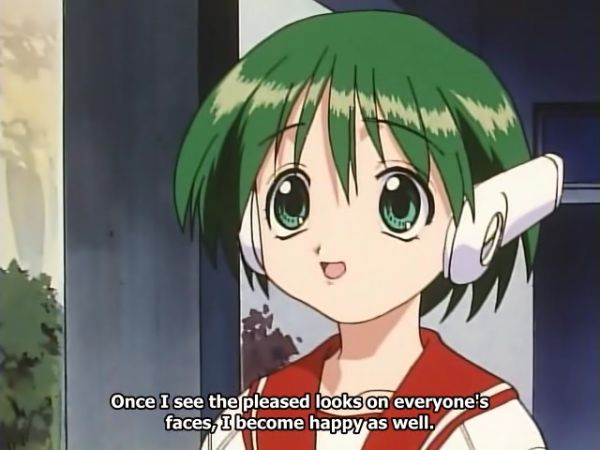
Once I see the pleased looks on everyone’s faces, I become happy as well. It is better than beer and Danish pastries!

I don’t remember if I came across Happy Science when I searched on Google for “happiness science”, but I know it was just around that time. Most people who look for such a thing are probably unhappy, so unhappy that they seek a change in their life. Certainly I read that this is a common reason for coming to Happy Science (the Japanese sect of that name).  For me, however, it was the opposite. I was wondering: Why am I so much happier than my friends and random people I meet?

These days, you can even read about people’s feelings on their blogs and “social media” like Facebook or Twitter. This has really brought home to me the fact that many people, perhaps most people, are unhappy. And not only evil people, but nice and friendly people who you would think fate would reward with joy in their hearts, even in the midst of the trials of life.

There are differences, of course.  The old are happier than the young, except for the very old who suffer massive breakdown of their bodies and brains. Married men and divorced women are all happier than unmarried men, with divorced men the unhappiest of all. The middle class is happier than the seriously poor, although happiness does not increase with money from there on up. Europeans are happier than Americans, and people in northern Europe more than those further south. The happiest of all are the Danes, but then again they start the day with a beer. I wonder if they would beat Norwegians if you could find enough sober Danes to run the survey on them… Well possibly. They have the pastry, after all!

And now I come to the point. For my search was not in vain. I believe I have learned what caused me to be bursting with joy most of the time when I am not sick and getting sicker.  No, it is not pastries, but we’ll get to them soon.

Ryuho Okawa may have pointed out something obvious, but I had never heard it before:  Happiness comes from having read many books, more specifically books by high spirits (great souls, geniuses in the classical sense). Having done this, high spirits in Heaven (or your subconscious) can draw near to you, and their being close brings happiness.

Note that I use the religious and psychological viewpoints interchangeably. True religion and true psychology are one, as there is only one truth if you go deep enough.  But often we cannot get all the way to the bottom, and then there will be different truths.

So your library is your doorway to years and years of happiness, a life overflowing with joy.  Or at least if you are like me or Ryuho Okawa when he was young.

Another interesting teaching of Happy Science is that humans exist at different spiritual levels, based on the number of dimensions they inhabit. This is eerily similar to the theory of Spiral Dynamics, but actually originated before it.  Unlike Spiral Dynamics, Happy Science uses religious imagery in explaining this.  You may find it easier or harder to understand that way, but let me briefly mention the main levels as seen by Happy Science.

The 4th dimension: Time.  All sane adults and children above the toddler age or so have access to time, in addition to the three dimensions of the material world.  They are aware that their body and their social relations change over the course of time.  A person whose highest aspiration lies within the four dimensions of space and time can be said to live on this level.  Such a person may aspire to physical fitness, or wealth, or popularity, or other things. But their aspiration does not go beyond the boundaries of the material world of space and time.

For a 4-dimensional person, happiness will consist in acquiring more of what they aspire for in this world.  This could be the pleasures of the senses, of which Danish pastries probably come in near the top along with chocolate and sex and any combination of these.  But it could also be some more lofty goal that is still within the domain of space and time.

The 5th dimension is spirituality, or objective goodness.  This is called the realm of the good, because good people go beyond “it is all about me” and begin to see themselves from outside.  By having your highest mind in the fifth dimension, in spirit, you are able to reflect on yourself, as if seeing yourself from outside. Those trapped in the fourth dimension cannot do this. So being able to reflect on yourself is a dramatic breakthrough.

Those who belong in the 5th dimension derive joy from gratitude. When they see the joy in other people’s faces, they become filled with joy themselves. This is an awesome thing!  A large portion of the human population, although probably no more than half, has come to this.  It should be encouraged, for it is still easy to sink down into the world of space and time. Advertising and political propaganda and even some modern education try to drag people down this way, and the joy of being happy together with others is lost.

Paradise, as we normally think of it, is a state of sharing pure-hearted joy with other people.  One must be without hate to enter paradise, and find joy in seeing other people happy. Those who feel joy in seeing others suffer will not last long in paradise even if they get in.

One should bear in mind that paradise is not a place, like another planet, but a state of mind.  We have to get there NOW while we are alive. But if you derive happiness from seeing the smiles of everyone, you are there already.

The 6th dimension is Truth. It is also called the Realm of Light.  Again, this is not some other planet or something, but a state of mind. Those who belong in this realm derive an intense pleasure from learning the Truth. I mean that in a most literal sense.  Their soul thirsts for insight in the same way a body may thirst for water if wandering through dry places for a long time.  To find it is pleasure that spreads from within to draw the body along with it, resonating in the pure joy. It is a feeling that is sensual only by resonance, the body resonating with the mind.  We who belong in this dimension with our highest aspiration go “Wheeee!” when we discover a new piece of truth.  Most true scientists obviously belong here.

The 7th dimension is altruism. This is the realm of saints and bodhisattvas, people who no longer care about themselves except for the good of all others. They eat to live, so they can be of service to others. They learn to become wise, to be of service to others. These no longer do good because the joy in other’s faces make them feel good. Even if they are misunderstood, even if their goodness is repaid with hate or scorn, they don’t falter.  They wish nothing for themselves, except the joy of love, which is the joy of giving.

There are hints of this life in the ordinary, for instance a mother will not throw out a baby who screams, but try to comfort him even if she does not feel like it. But these are just shadows. It is hard to imagine a life of pure giving, the life of a saint.  Even at my age, I only see this from a distance. I don’t really live that kind of life myself, and I wonder if I ever shall. Possibly, if I live long enough. But right now it is pretty distant.

So I won’t go any further than that.  As you see, there are different happinesses for different people.  For some, the greatest joy in life is to eat Danish pastries. For others, it is to be surrounded by happy friends who can laugh innocently together.  And for some of us, it is learning about the hidden things in nature of in the human mind. And then for a few, happiness is entirely outside themselves, in the act of giving unconditional love, or compassion.

(Note that you don’t really move from dimension to dimension, you add them. So even if reading the Wisdom of Solomon makes you want to dance with joy, that does not mean you suddenly dislike pastries, or beautiful music, or friendship. You add new and ever stronger sources of joy to what you have. You grow.)

There are actually different layers within each of these rough groups, of course. So there is a wide range of things that can cause happiness. Conversely, when people fail to live according to their highest aspiration (perhaps because society tells them they should seek something else), they become unhappy. And this is very common today.

Reflect on yourself, what is it that truly makes you happy?  What does this tell you about who you really are? It is still possible to change, while you are alive. But first you need to get to where your heart is, before you can start moving forward. Hopefully that does not mean a massive investment in Danish pastries and beer, or you would probably not have been able to read this entry.

Radio from Hell

“Your soul has been defiled!”  By radio? Well, that’s not quite what I mean…

I turned on the radio this morning. I have a portable stereo in the bedroom, I use it to play brainwave entrainment tracks almost every night. I had forgotten that it also has a radio tuner… In fact, when Gallup called the other day to invite me to a detailed study of broadcasting usage, I told them my household had neither TV nor radio. In practice it certainly seems that way, so hopefully I will be forgiven that lie.

This morning, however, I actually turned the radio on. I even tried 3 different stations. My impression was that ordinary people are in a kind of hell. Either that, or I am in a kind of paradise. Wait, does this paragraph even make sense?

What is the connection between radio and hell? There wasn’t one when I grew up, or at least I did not notice any. I think the people who have continued to listen to radio since then, probably still don’t notice.  But as I switched from one station to another, they all were so… jarring, I guess. Or like food made for elderly smokers – too sharp, painfully so. The music is disharmonious for the most part, and even when not, the lyrics are. We’ll be back to that in a moment. But even the news seem to be collected to make people upset, not to actually help them live their lives better or more safely.

The third and final radio station played Dolly Parton, who at least can sing well. But the song she was singing – “Jolene” – was an all too vivid reminder of the hell people today live in, where you not only have to fight for mating rights until you marry, but for the duration of your life.  (I don’t think she actually said anything about marriage, but this is how it is here in Scandinavia at least these days.  It is like civilization has slipped and fallen in this particular regard. I don’t mean you should treat your spouse like you take them for granted, but you should be able to take them for granted without treating them that way.)

This jagged, disharmonious, disturbing world is what people live in, is it not? A world where beauty is either absent or tainted, distorted, broken. A world where harmony is not just rare, but unwanted. God, how did we end up this way? What can we do about it?

I take a certain comfort in being disturbed by this sudden glimpse into the ordinary world. Perhaps they are not so much living in a half-hell as I am living in a half-heaven? Or perhaps that is always the case, the world below us is always hell and the world above us is always heaven, no matter which world we live in? So if you go to Heaven, you will find that even Heaven has a heaven.

On a more prosaic note, I think the reason why I dislike radio and television is that they try to think for you. With the Web, you click what you want to see or hear (or think you want), but with broadcasting there is someone else clicking for you. As if you were a patient unable to use your body from your neck down, and all you can do is open your mouth and they will put things in it. I would be hard pressed to spend much time using broadcasting even if it was of the same quality and had the same focus as myself.  But it doesn’t. It is different, at the very least. And in my ears, unpleasant.

Not literally Hell, I suppose. More like “Heck”. The realm of the Prince of Insufficient Light, if I remember my Dilbert correctly. That’s the world in which even Norwegians live these days – a world of insufficient Light. And the problem, the REAL problem, is that people like it that way.

Inferior Lightwielder worldbuilding

I was imagining something weird again. This is unlikely to surprise regular readers, I suspect…

Actually it is not the worldbuilding that is inferior, although that may also be true. Rather it is the world itself, most notably its people, among them even the Servants of the Light.

I admit that it was Rabbi Steinsaltz’ book that prompted me to sketch out a new story. But it contains nothing I could not have written before. I came up with the idea of vertical, hierarchical worlds when I was still young. I think maybe 19, but I have no writing from that age, so I am not sure. At that time there was nothing religious or spiritual to it: I had picked up the idea of parallel worlds (or dimensions, as they were erroneously called) from a book by Norwegian SF authors Bing & Bringsværd. Their worlds were parallel horizontally rather than vertically, gradually becoming more alien with increasing distance from our reality, I think. In any case, at some point I changed my view of the multiverse to vertical and hierarchical, although at that time it was still pure SF.  Then some 25 years passed before I found this worldview again, in a different context.

In my latest story, the protagonist is from a world much like our own. In the library he chances upon a book that describes dozens of other worlds, in a brief but factual way, as if a textbook for world travelers rather than a piece of fiction. One of them stands out: The world where the community of Servants of the Light have worked tirelessly together to fill the whole world with Light, to the point where it became a paradise and eventually ascended to a higher level. This world again has now given birth to lower worlds, and while it is higher, they are lower.  Our hero decides to try the ritual written in the book to travel to one of these worlds.

The world of Gebir is an instance of Earth, with similar but not quite identical races of humans, animals and plants. However, this world, by virtue of being a little lower than ours, is inferior in details.  The soil itself is less fertile, and life is nastier, more brutish and shorter. The human races there are not only a little weaker physically and more prone to illness, but their lifespan is shorter even when they die from old age: An age of 65, or 70 for the strong, is considered ripe old age.

Worse yet is the mental inferiority of the people. They learn more slowly and forget more easily. Their attention span is shorter, and it is harder for them to see the consequences of their actions, for themselves and for others. Logic is a virtually unknown art, and superstitions reign.  (In all fairness, they do live in a world where a certain type of magic actually works, but they will believe in many other strange things as well.) Their willpower is nothing to write home about, they are easily mastered by their appetites, whether it concerns food or drink or sex or sleep. Quick to anger and easily distracted from work, especially mental work, they progress slowly and backslide quickly.

The sad truth is that these untermenschen are largely patterned on our own ancestors, from the middle ages backward.  It is hard for a modern person to imagine the sad state of mankind 1000 years ago, let alone 1500 years ago.

(Let me briefly once again say that I consider the “Dark Age” of Europe to be from the final generations of the Western Roman Empire, through the violent and chaotic era where entire nations were moving around, to the beginning of Carolus Magnus’ new Holy Roman Empire (which was neither holy, roman, nor – for most of its time – a real empire.) From here on, if not before, there was a slow and fitful progress in many areas. The Middle Ages, then is largely a time of progress, leading toward the Renaissance. It was certainly not guaranteed to end that way – China pretty much ossified before reaching the modern age, despite having a lead on Europe for much of the time – but neither was it some kind of black hole.  Things were even worse before.)

Now I am not saying that our world is in the process of ascending to a Paradise and beyond: There are still so many things that can go wrong, and some of them are indeed going wrong even as we speak. But comparing the English-speaking people today with their ancestors 1000 years ago, not to mention even further, even common people today appear as supermen in health of not only body but mind as well.

Be that as it may, this is the first time in a long time indeed that I design a world that is consistently inferior, and humans who are a breed of losers. I must admit that I had to reflect deeply on my fascination with the depravity I imagined. There is a saying about people who go into the sewers to clean up and people who go there to bathe (social realism anyone?). I am still in a very early phase of this project, having written only a couple thousand words. I am not sure how viable it may be. Let’s say I am not quitting my day job to write on this.  But I make these few notes just in case.