Back into the freezer

Oh yes, it is winter.

A little slice of life here! After all, life is good to have too. ^_^

Although when you put things in the deep freezer, it is in order to stop all life processes, such as bacteria or fungi, and even the natural chemical reactions in organic matter. The recommended temperature for a deep freezer is -18C, or just below zero F.

This morning, it was -19C. It bottomed out at -20C around noon. Luckily I work indoors. But seriously! It’s like, you expect to see frozen mammoths littering the roadside, and rampaging 20 feet tall snowmen battling your city’s superheroes… OK, so the 20 feet snowmen are in City of Heroes, but it kind of fits the atmosphere.  It certainly does not seem to fit THIS Earth. The usual temperature here on Norway’s south coast used to be around -5 in the last half of December, but for some years until recently we began having green winter until well into January. And even in February, having -20C here on the south coast was rare if it even happened.

I admit that you don’t really have a guarantee of warm weather when you settle in Scandinavia. Sure, the combination of the Gulf stream, the Icelandic upwelling and a fairly steady wind from the west (thanks to the Coriolis effect) makes mild winters pretty likely here, unlike Alaska, which is not so far north of here. But it is not like there haven’t been colder winters throughout history. Just not in my lifetime, or the lifetime of my parents. But there was one 94 years ago. So two since people started measuring temperatures around here. I am sure there were many more during the Maunder Minimum. (A couple generations around the year 1700, when the big rivers of Europe were frozen, and even some of the straits.)

Until recently, it was assumed that the Maunder Minimum affected all the world. But this has been cast in doubt recently, just in time for the current low-sunspot period. It may have seemed like the world was freezing because western Europe pretty much was the world at the time, it being a low tide for the few other civilizations still around, like China.  Scientists predicted a couple years or so ago that the new sunspot minimum would mainly affect western Europe, and it looks like they were right. It seems to be business as usual elsewhere.

It is pretty much business as usual here too, only more expensive. But if something happens to the power grid, then may the Light help us all. Well, I have the wood stove and candles, I could probably stay alive for a few weeks with careful planning. But sometimes I just stop and think about how vulnerable we have made ourselves and our grand civilization. As everything become more and more advanced and abstract and specialized, how long will it last until civilization collapses from want of a nail?

At least I won’t need a freezer for some days, it seems.

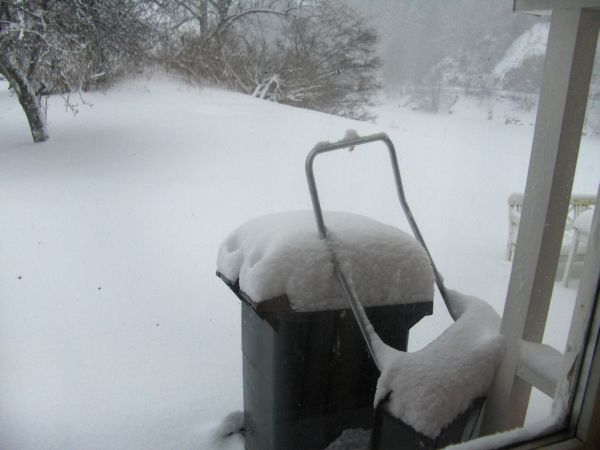
Oh, and the snow you see in that picture? It cost me 700 calories (kcal in European) to clear it all away. ^_^

The horse harness

I think I needlessly mixed up two concepts in my previous entry: Fame, and being important to others. Sometimes they go together, sometimes not. For instance, no one talks about the one who invented the modern horse harness, which allows horses to pull great weight while still breathing freely. Supposedly this happened in China in the 5th century. Perhaps someone there knows. It seems like such a small thing, but it revolutionized agriculture and land transportation, and thereby trade. It came to Europe around the year 800, and without it the Dark Ages might have lasted much longer, if at all moving on toward the Middle Ages (not the same thing!) and eventually to modernity.

The Roman empire did not have the full use of horses in agriculture, although they did use horses in war. Instead, they relied on slave labor. While slavery has happened later as well, we cannot really imagine how important it was to early civilizations. The Christian message of freedom for the slaves, even if weaseled out of at certain times, was greatly helped by our hairy friend the horse, harnessed by a simple invention born out of empathy. Anyone who saw a horse struggle in the old type of harness should have been aware that it had trouble breathing when working hard, but it was probably just one man – or possibly even a woman or child – who thought of how to change it. By giving the horse greater freedom, they also brought freedom to hundreds of thousands of workers through the ages to come.

From “small” things like this, our history became possible. There are many turns where history could have slipped and fallen (and sometimes, it seems, it really did). But here and there, now and then, once in a thousand years, someone came up with an idea that changed everything. Sometimes it was someone great and famous, like Archimedes or Edison, mass inventors both. But sometimes it was just some guy, forgotten by those whose lives he saved.

“I have been here”

“I learned to be kind because of you.” That is how Unlimited Translation Works renders this line from the song “Kimi no mama de” (YouTube link). The line has also been translated as “I was able to be kind because of you”. So anyway, what have you learned or become able to do because of me?

I have been listening several times now to the song “Read my name” (YouTube link) by Chris de Burgh. I have mixed feelings about this song, and those who know me can probably understand why. Here is the chorus and the essence of the song:

I have been here!
read my name, read my name!
With all I’ve got I’ve taken part,
I’ve made a difference to the world.
I have been here,
just read my name!

Chris has mentioned in at least three of his earlier songs a practice of going to the graveyards and reading the names on the headstones there. I get the impression that he considers this a kind of sacred act, as service perhaps both to those who lie beneath those stones and him who doesn’t yet. Because for each such name, there was someone whose life was just as important to them as our life is to us. Someone who dreamed, and tried to share those dreams. Where we are, they have been. Where they are, we shall be. They have been here, just read their names.

I read an article on a Norwegian computer related web site the other day. It said that only a small part of the population used Twitter, and of those who did, only half actually read other people’s tweets. The other half were only interested in sending tweets, not reading them.

My reaction was that this was probably better than in the flesh, where it seems the overwhelming majority are in love with their own voice, and will use most of the time when others speak to prepare their next “message”. In contrast, as I believe my brothers can attest, I rarely have anything to say when I converse with people lately. When they speak, I am listening to them, so I usually don’t have much of a rejoinder when they draw their breath.

Yet even I have my “dance” that I wish to perform in front of the other bees, to tell them where I found my sweet flowers. This is the human condition, I think. (And that of worker bees, or so science says.)  But what does it amount to, beyond “I have been here, read my name”? What is the difference I have made to the world?

2000 years ago, when Jesus Christ lived, there was some 200 to 300 million people in the world. A number of them are still known by name, but even your high school teacher would only know 20-30. To get up to 200-300 (one in a million), without resorting to specific books on the topic, you need a classical scholar. And even then, you don’t get much further.

That is not to say that none of the rest made a difference to the world, a tiny and local difference. And due the “butterfly effect”, history might have been drastically different if one of them had made a different choice one day. But most of those lives kind of canceled out, like the waves of a raindrop hitting the sea on a rainy day. And then there was the depth charge that was Jesus Christ, who set off a tsunami that is still making waves 2000 years later. But how many would have followed his twitter in the year 25, compared to any other random raindrop?

Not so much comparing myself to the incarnate sky-god here, as just reflecting on the scope of things, and how hard it is to say who we are until we are forgotten and only the work we did remains.

Someone else’s theory, put quite simply, is this: The Savior is the light of the great saints. The great saint is the light of the other saints. The saint is the light of the heroes. The hero is the light of the good people. The good is the light of the world. -Details may vary, but in the old days, hierarchy was considered natural, and most thinking people would recognize the expression “the great chain of Being” even if they had not heard it before.

Today, we have democracy, and those who vote depending on the color of someone’s necktie have as much influence as you. Or that is the theory. But it is not quite like that. Well, it may be in elections, but most elections are much less important than people believe. If random people elect other random people, the result will not rise above randomness. And if you cannot rule your own home with wisdom, let us not mention your own body, what will you achieve even if you rise to power or fame? Randomness. Some poor forgotten widow whose feeble life has a single direction will accomplish far more.

By resource or talent I could be a hero, one of a hundred. But apart from a brief spurt of software development, my life has mainly been a raindrop on the sea, so far. Or so it seems to me. But we won’t really know until I am forgotten. As the flesh hides the bone, so does the personal life hide a man’s work. But in time it will be all that is left in this world. (I don’t mean “work” in the sense of “employment”, of course, but accomplishment.)

More quiet revolutions (please)

Preferably as quiet as this. Screenshot from the exceedingly family-friendly anime Kimi ni Todoke (Reaching You), which is not actually sponsored by Happy Science, strangely enough. It is not the happiness that is lacking, at least.

The December issue of Happy Science’s monthly magazine is out. It is mostly about childhood and its enduring influence on your life, and about how you can (and should) look back at your childhood with new eyes and seek to understand your family and yourself as you were at that age. Things that seemed pure bad at the time may make sense now, if you look at it from a much higher perspective than you could then. In this way, you transform your past, and thereby your present and your future.

I have already done some of this before, but I don’t remember all that much about my childhood (except the dirty jokes I read in my brothers’ magazines. It is amazing how well I can remember those after 40 years. I must have a “pornographic memory”.) Anyway, it is said that when you have children of your own, you remember things from your own childhood that you otherwise would have forgotten. Because you have to deal with the same things that your parents had to deal with, and you remember how they did it, and perhaps when you do the same thing to your children you remember how much you hated it and it gives you pause.

I don’t have children so I will probably continue to not remember much other than the books I read. Actually I am not sure I did much at all except reading books (and my brothers’ magazines) and play alone by the streams. Oh, and go to school and taunt the bullies, who would then proceed to beat me up, making me angry so I would taunt them again on the next opportunity. An endless dance or mutual arrogance. But that part of me has already been transformed by self-reflection, which is one reason why there is less hell in me these days than there used to be.

Anyway! More quiet revolutions! The Happy Science Monthly also has an excerpt from a lecture by Ryuho Okawa, the would-be Buddha of our age. “When we first started, we could not even imagine taking responsibility for the happiness of all humanity. However, today, I strongly feel that it is our mission to spread our message across Japan and the world; it is our mission to guide all people to happiness.” Yes, wouldn’t that be nice, if they could guide all people to happiness! There are still almost 7 billion left though, compared to the perhaps 10 million they have supposedly guided to some degree of happiness so far. Keep up the good work!

I am not being entirely flippant there. I may not actually believe that Mr Okawa is a god from Venus, but I do think that if somehow his teachings come to influence the majority of people, we would definitely enter a golden age the like of which has not been seen in recorded history. Love, wisdom, self-reflection and progress is good stuff. Unfortunately, I am all too aware that most people have very different priorities from that, so it won’t be easy. Jesus Christ still has not reached all the world after around 2000 years. And most of us who have heard him haven’t understood much of what he said. So, it is a long canvas to bleach, as we say around here!

Mr Okawa remains optimistic, though. “We are now in the midst of creating a quiet but sure revolution, which will influence neighboring countries, Asian nations, Africa, Europe, and America. By spreading the spiritual Truths, we are gently undoing the mistaken values of today’s society. We are bringing this world back to the world of Truth, where it came from.”

Quiet Revolution? That sounds familiar:

There’s a quiet Revolution going on,
Like a fire in every corner of the world,
And friends that you have known for many years,
Are talking with a new light inside,
Talking with a brightness in their eyes


There are quiet celebrations going on,
So many have been waiting for so long,
To see the whole world waking from a dream,
And find a new dimension inside,
See a revelation in our time,
Something is coming now,
Something is coming now.

-Chris de Burgh, fromQuiet Revolution.

Unfortunately it will probably take some time still for the whole world (or even the reasonably civilized world) to wake from its dream. But quiet revolution is definitely the way to go.

It’s all about me!

The little guy in the background is the main character and presumed future emperor of the galaxy, but people do whatever they want without considering him at all. With me it is the other way around: I am just some guy, and yet the mighty rivers of the air change their course to accommodate me. I am not sure what is the more disturbing of these two situations.

Well, you could wonder. The weather stayed mild for approximately one day, from Saturday evening to Sunday evening. Then the land went back into the deep freeze, even more than before. It is around -15C now, varying from -13 to -17 (8 to 1 Fahrenheit).

It was enough for my water pipes to thaw though, so I still have water. Even the shower has worked since, though one may wonder how long that can last. It seems unlikely that this whole thing happened over all of southern Norway (and probably some more) just for my sake, though if I had been the main character, it would certainly have made sense.

I think I’ll wait a bit longer before declaring myself the Most Important Person of Scandinavia though. I am reminded of a Christian meeting I was on shortly after the fall of the Soviet Union, at which point an elderly man in the congregation got up and told us all that he had prayed for just such an outcome. That was almost certainly true. But I suspect that pray for this also did a large number of the tens of millions who were murdered, directly or indirectly, by the Soviet system, and a goodly number of their relatives as well. And while I cannot say for sure, I would not be surprised if their prayers were at least as fervent.

In fact, being the main character in one’s own eyes is one of the biggest problems of being human. But that said, I do appreciate having running water in my bathroom again, even if I’m not the Main Character except on my blog!

The Xanth effect

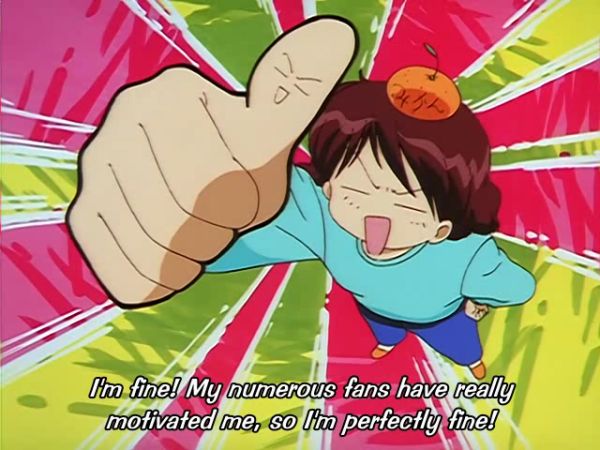
I’m perfectly fine!

Thank you for your prayers and well-wishes! So much time has now passed since the unfortunate double meal, it really seems I will avoid my punishment this time. Of course, just waiting for the ax to fall has been a learning experience in itself.

Today I want to talk about another fascinating aspect of the human mind. I have called it the Xanth effect, after the long series of light fantasy novels by Piers Anthony. I am myself a foreigner to English, learning it as a third language. As an adult, I had my vocabulary extended, expanded and enhanced by the Xanth books like many American youngsters. However, like them I gradually found the later books less appealing than the first. This seems to be quite common. However, there is a big difference: My first Xanth books are not their first Xanth books.

The series debuted in Norway in its middle.  My first Xanth book was Heaven Cent, if I remember correctly. (Somehow I keep remembering it as “Skeleton Key” instead.) It was love at first sight. I had been writing for years, but the mix of puns, magic, drama and just random randomness was something I knew I could do better than anything I had done before. It influenced my own writing for many years. My fiction on the YouthNet BBS network was in my most heavily Piers-influenced phase.

I also loved the next books, Man from Mundania in particular but also parts of Isle of View.  I kept enjoying some of the later books, but eventually I found them lackluster. However, around this time new prints of the earlier books became available, so I bought some of them.  They were even worse.

Yes, dear reader. The quality of the Xanth books declined with the number of Xanth books I read, not with the number of Xanth books Piers Anthony wrote. The order of reading, not the order of writing, determined how good they were. In other words, it was all in my head.

The same effect, only faster, is observed with David Eddings’ epic fantasy books. Then again, they are basically the same book written over and over, if you skip the details. Of course, some people don’t skip the details.

I wonder if the same does not apply to my journal, but it is hard to be objective with oneself.  But just in case, just ask for your money back. ^_^

“Fighting” illness

Women are also encouraged to inspect their breasts regularly, although “Yep, still there” probably isn’t doing the trick. The health benefits to men of regularly inspecting women’s breasts is still in doubt, but statistics so far indicate that the ideal number of breasts to inspect regularly is less than 3.

No, today’s headline is not meant to worry you. Apart from a tiny head cold and burning my left hand on the wood stove, I am fine, as far as I know. Rather, I want a word with the whole “fighting” thing, which I believe is stupid and counterproductive.

I see this expression used in general, but mostly about cancer. I can see how people may think of cancer as some kind of enemy, since it is dangerous and unpredictable. But it really is no smarter than cursing the chair when you stub your toe. It may make sense at the moment, but the chair is utterly unaffected by your curses. And so is the cancer, I have every reason to believe. And then some, possibly.

Because reading is more or less automatic with me, I sometimes take in headlines of popular magazines in the shop even though I don’t buy them. And there will be a picture of someone who is probably famous in the 3-dimensional world, or at least in the 2-dimensional, and the words “Lost the battle against cancer”, which means the person is dead. What the hell people. Are you a loser because you die from cancer?  Or would these people say “Lost the fight against the lawnmower” if they got run over by their excessively heavy and pricey gardening equipment? That would actually make some sense, but usually you have the good grace to not say such a thing out loud even if you think it.

Cancer is not some guy. It is a malfunction of our own bodies. The body WILL malfunction in some way sooner or later. Even I will die one day, barring an extreme case of divine intervention. (Which seems highly unlikely, though I suppose it would be a nice surprise.) You are not a loser just because you don’t live eternally in this world.

(Incidentally, my ideal obituary would be something like this: “It pleased the Lord to take him home, but it did not please anyone else.”)

The second part of the equation is that fighting, in the sense of being mentally agitated, may actually kill you. All studies that have even looked at the matter show that meditation – the opposite of flailing around – improves the immune system, while stress weakens it. We may question the intelligent design of this, given that any normal person would probably become agitated when diagnosed with a potentially fatal illness. But I guess it does level the playing field a bit, since meditative people probably come later to the feed trough and may also be less likely to procreate. So they should have some benefits so the planet is not completely overrun by barbarians.  (In so far as it is not already.) Or perhaps the Designer just likes people meditating. In any case, it works to some extent, while fighting does not.

Vitamin D also helps regulate the immune system, making it more active when needed and less likely to attack healthy tissue. You can get it from direct sunlight, or if you live in Norway and it is winter, you can get it from cod liver oil, which is cheap and widely available. I suppose vegans will have to take an expensive trip to the tropics to soak in the sun instead, but I have only moderate qualms about cod liver oil. Verily, ye are more than many fishes! is what I think. Besides, they get their revenge in the horrible taste of the thing.

It is indeed a widespread belief that somehow forcing yourself to be optimistic will improve your odds of surviving illness, particularly cancer. However, this is as far as we know just an artifact of  the mind. A study years ago (which I failed to bookmark, it seems) actually did interview people who were newly diagnosed with cancer, about their optimism or lack thereof. A few years later, they interviewed the survivors. There was no connection at all between the initial optimism and actual survival. However, there was a very strong correlation between survival and remembering that one had been an optimist, regardless of whether this was actually true or not.

Life is actually a lot like that. Neurotypicals spend a lot of their time editing their memories to conform to consensus reality, the reality people agree on as opposed to the reality they experience in the moment.

Another fascinating but rather obvious study showed that looking at pictures of sick people actually increases the activity of the immune system. This makes perfect sense, since in the wild humans live in close-knit communities. If you see someone obviously sick, the germs are probably already all over you, or certainly will be in a few hours.

So in short: Don’t be pointlessly optimistic, take your D-vitamin, look at pictures of sick people and meditate. Oh, and don’t divorce your wife, if you’re a male. Exercise daily. Die anyway sooner or later. (But hopefully later rather than sooner.)

The future of work

Those who like what they are doing, would presumably still do it even if others got money for nothing. But within limits, I suspect.

I recently read a short, but interesting essay titled “Jobs Are Bad, M’kay?“. In this, the Young genius argues that people should work only if they produce Stuff (which of course includes services) that cannot be produced better without human labor.

This is eminently logical, and true from a materialist point of view. It ignores the fact that work is a form of love, but then again it is common today to think of love as a very private thing, so this is understandable.  But even without a spiritual perspective, I think his conclusions are very worrying. Not so much wrong as sinister.

A Swedish study a few years ago concluded that approximately a quarter of the population would not be employable in the information society. The numbers are probably higher here in Norway, since salaries are higher than in Sweden; in the USA the numbers may be lower now. But the really disturbing part is that the proportion  is going to change for the worse, and fast.

The children who are born today will not be in the workforce until 20 years from now, at best.  In that time, the performance of computers will increase literally a hundredfold, if Moore’s Law holds up, as it has for the past few decades.

When I was little, manual labor was still common in the countryside. These newfangled digging machines were just starting to take over the digging of trenches, but there was still plenty of other hard work to do.

When I was 20 and had just begun in my first job, we had a whole crowd of former housewives who were sorting documents, putting them in folders in the archive, and retrieving them. I also did my share of this, for it was an entry-level job.

Twenty years later this was gone. All the sorting was done by computers. We did not get woman-shaped robots running to and from the archives, but the housewives were replaced even so. The future comes while we look another way.

That was ten years ago. At the time, speech recognition (as in dictating to a computer or giving it orders with your voice) was expensive, unreliable and really only an option if you could not move your arms and legs. This year, there was a question on the NaNoWriMo forum whether such software was considered cheating, since it was so much faster than typing.

What will you teach your child, that a robot will not be able to do 20 years from now?

When the time comes when only 25% of us are employable, as opposed to 75%, what will we do? Logically speaking, as the Cerebrate points out, there will be more stuff to each of us if we just pay them to stay home rather than building offices or workshops for them to pretend working in. But how will they feel about that? How will those who CAN work feel about that?

For me, work is an act of love. If I can do a job that is actually needed, I will do it even if I get paid the same for staying at home writing novels. (At least unless my novels get better than they are now!) But I don’t think most people look at it that way.  I think they will demand more and more money for going to work at all, knowing that half of their income goes to people who can sleep in and then enjoy a leisurely lunch in their PJs.

And the more you pay the people who actually do work, the greater the incentive to develop robots that can replace them. It is a spiral without an end. Or rather, it seems likely that it will all come tumbling down before we reach the logical endpoint.

The only solution, in my view, is to change from a civilization based on maximizing Stuff to a civilization based on maximizing Happiness. Because numerous studies show that once the median income of a nation go much above $10 000 a year (in the exchange rate of  around year 2000), happiness does not continue to climb with increasing income. In some case, notably the USA, the happiness actually becomes less over time. (In Europe, happiness is still increasing, but very slowly, and this rise may be because of gradual dismantling of old national monopolies and thus increased freedom rather than increased money.)

A huge amount of the stuff you people buy is used to impress your neighbors. If we had a happiness-centered civilization, you would not need to do that. And because the greatest source of happiness is to give happiness to others, everyone would “work” in the sense that they would try to do something for others, no matter how small and simple. And for the directly productive minority, it would be much easier for them to share their Stuff with people who were trying to do some good, even if they were not very good at it, rather than with people who just sit on their ever growing backside and demand more Stuff.

That is what I think, but at least I think at all. How about you?

America’s election

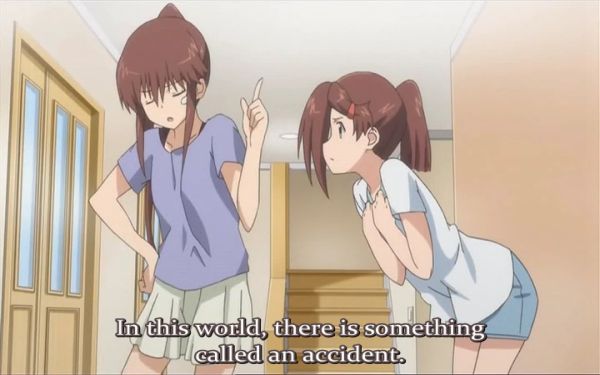
In this world, there is something called an accident. This election comes to mind.

So, lots of Republicans in Congress now, from what I hear. Big disappointment (but not entirely unexpected) for much of the educated classes, from which most of my online friends come. I don’t think they really understand what is going on, but then most of them are still young and also don’t have much time to listen to the silence. So, public service announcement here!

This election does not show that America has finally realized that Sarah Palin was sent by God to restore the World’s Greatest Nation to its former glory and purity. It is just a natural, almost mechanical, fluctuation in the voting masses to restore equilibrium. In a democratic society, people really and with a vengeance dislike one-party rule. And it hasn’t been this one-party for quite a while. With the Democrats in control of Congress, Senate, Presidency and Supreme Court, it was no wonder people got cold feet. This is simply not natural, and I mean that in the most mechanical sense.

Let me illustrate with an example from my native Norway. The political constellations are a bit different: The Supreme Court is less politically active, the King not at all. The cabinet is in practice chosen from the majority of the parliament.  The current center-left coalition came into power replacing a center-right coalition. The non-socialists had delivered 4 years of rapid personal income growth, increased economic liberty, lower taxes AND budget surplus. Despite this, they were voted out.  It makes no sense to those who think general elections are some kind of referendum on the success or failure of the government. But that is only part of the truth, you see.

The other part is the modern equivalent of the ancient Jewish tradition of laying all the sins of the people on the head of a goat and chasing it out in the wilderness – the origin of the word “scapegoat”.

With the Democrats everywhere, there was simply no chance of finding a goat elsewhere. Well, they could have started a war, but it is not really their forte. So, the sins of the people are laid on the head of the incumbent congressmen, and they are chased out in the desert.  Just like their Republicans predecessors were less than a decade ago. People seeks some deep meaning in this, but people sought some deep meaning in the goat as well, no doubt. In reality, it is an almost mechanical mass reaction in the collective psyche.

If the election results end up being as first reported, a kind of balance is restored: The Democrats can blame the goddamn idiots in Congress, and the Republican can blame the goddamn idiots in the White House and Senate. There will no doubt be further oscillations in the years to come, if any. But the important part is that everyone now has someone to blame, so can continue their dysfunctional behavior until the next goat-scaping season.

A dash of hyperlexia?

While hyperlexia is overwhelmingly more common in boys, here is a fictional depiction of a girl from a Japanese animated movie. Her friend is tied up with a garland of flags, and rather than freeing her, this girl is compulsively identifying the nationality of the flags. OK, that is more “autism spectrum” in general, I guess. 

When I was still young, I half-joked that I must have the opposite of dyslexia. Today I know that there is indeed such an opposite. It is called “hyperlexia”, reasonably enough. And it is not considered a good thing.

If you look up hyperlexia on the Net, you will find it described as a rather debilitating disease. Sure, the kids learn to read while they are 2-3 years old, but they don’t understand what they read, and they spend their time performing rituals instead of asking questions or playing with other kids.

I am sure this is right – for some kids.  The ones that are “reported”, so to speak. If your child just learns to read early, and does well in school, has no disturbing tics and generally does not rock the boat, nobody will ever diagnose it in any way. So the reported cases are probably misleading. Not that they are not true, but they represent only those who lack the ability to adjust to the system, and so badly that they and their relatives can’t cover it.

Of course, that is what the name implies. Hyperlexia means “over-reading” or “too much reading”. Well, roughly. Let us not get into lexical detail. But in medical use, “hyper” is not a good thing. I guess there is a reason why Superboy is not called Hyperboy…

As it happens, I seem to only have a mild form of the same syndrome. I am not sure when I learned to read, but it may not have been until the age of 5. I started school at the age of 6, so I know it was well before that, because when I started school, I could read books and newspaper (and did so for pleasure). I could also write on a typewriter, and my spelling and grammar was – from what I am told – more like what other kids have when they finish compulsory schooling, rather than begin it. The content, however, was the utter drivel you would expect of a small boy, or worse. I was certainly not mature for my age.

There was certainly nothing wrong with my reading comprehension, and if I asked less “why, where and when” than other kids, it would be because I had already read why, where and when in the school books of my three older brothers. I was curious in my own way, but I did much time alone (although I was very vocal when I was together with others).

I did not play well with other children, for sure, but there were a couple reasons for this. One, they were idiots. Two, I was small and weak, having had asthma since I was a toddler. (This was before the current asthma epidemic – I did not have any classmates with asthma until high school, I think. And by then I did not have it anymore.) For the duration of my childhood and the next three decades, I was convince that my physical weakness was the reason why I was constantly bullied. And I was, pretty badly too. I was rather frail even when I started school, but during my first three years in school I lost 3 kg (about 6 pounds, I believe) and did not grow at all. This was in no small amount due to my mental state, I believe. School, which I had looked forward to with the highest expectations, turned out to be a nightmare, an ongoing horror with no end in sight.

Knowing those kids – and kids in general – I still suspect that they would have bullied me mercilessly even if I were a saint, simply because they could, since I was small and weak. However, the truth is that I was weird, arrogant, prone to rages despite my weakness, and reveled in humiliating others. So they would probably have ganged up on me and beaten me up even if I were some kind of child titan, simply because I deserved it. But I had no idea of that back then. I had no self-reflection at all. It was far from me. I would not even pretend humility, even if my health depended on it. No humility. Not even in the face of Armageddon. Never humility.

My asthma receded sometime around the age of 10, although I remained smaller and weaker than my classmates for several more years. In high school I gradually began to catch up, and in high school I was no different from average in size, although I still was weaker than others since I had internalized my fear of ever exerting myself. (Exercise would always cause asthma attacks, and indeed still does, although it takes some serious work now.) I also had no physical confidence and was unsure of what I could or could not do, so I remained weak and somewhat clumsy. As an adult I am actually “anti-clumsy” in that I am less likely to collide with people and objects than the average adult, although I may still slip on the ice or stub my toe once in a blue moon.

I had the extremely good luck to go to high school in a place where people still considered academic prowess more important than physical strength. Today, high schoolers are much like children in these matters, and some places it was already like that. But not there. So I had my glory years. I was more or less respected, despite being a bit weird. For example, I did not notice other people’s body language or even facial expression much of the time, and my own facial expressions were exaggerated or disconnected from what I was saying. I have never really understood the need for facial expressions, I guess. After all, books do fine without them.

I have started to use facial expressions later in life though.

So yeah, a dash of hyperlexia, and a dash of being a spoiled brat probably. But it was certainly worth it. Frankly, there is no way those kids I grew up with could have been as good as the books. In truth, they would probably have been a negative influence on my life. Fairly little offense intended, but I don’t think I could possibly been happy living lives like theirs, even lives like they are living now. I was meant for another world, and the bookshelf was my gateway to it.

I guess another word than “hyperlexia” is needed. Perhaps “eulexia”? Good reading? I’m certainly willing to trade a few years of being chased around and bullied for the ability to read well. Even though I have now realized that I may not have had to make that trade in full, as much as I did. But I would probably not have been able to reflect on myself back then, even if I had read about it. Thank the Light that I did read about it later, though.