Dentist and hubris

Today I went to the dentist. Somewhat to my surprise, after all these years, he asked where I worked. What’s up with that? It’s been a decade, if not two. Perhaps he had been reading my journal here and could no longer control his curiosity. Probably not though, since he first asked whether I was employed, before he asked where. It has nothing to do with employers’ dental plans, because we don’t have them in Norway. (Possible exception for boxing and similar sports where teeth are likely to fly. American-style football also comes to mind. Anyway, it is not normal. We don’t have public dental coverage either – each of us pays for ourself.)

The pay was fairly moderate this time, because there were zero holes again. I felt pretty good about this, although a bit surprised. I live mostly on carbs, after all, since I can’t eat more than small amounts of fat without getting ill, and really hate eating meat and fish. Not so much for religious or ethical reasons, although those don’t help exactly. It is just icky. That leaves carbs of various kinds, neither of which are known to be loved by teeth. (Except the indigestible sugar xylitol, which is known to protect teeth but can upset digestion in larger doses. I don’t eat much of the stuff.)

I felt pretty proud of my achievement even so, and as I posted on Google+, decided to celebrate with Pepsi and chocolate.

The soda tasted disgusting. That is not a property of Pepsi generally, but this particular bottle was not their best, it was one of the worst I have ever tasted from that brand. And then I broke my tooth on the chocolate bar.

OK, not really, it was already broken, it is the usual one which breaks every few months (or roughly as often as I buy some new gadget, which led me to the conclusion that “every time I buy a laptop, God breaks one of my teeth”. This one would be the retribution for the Samsung Galaxy Tab, although I am not sure whether it actually broke before or after… but in any case, it came out now. On the bright side, I didn’t swallow it. It has a longish metal pin on the root side, so that would have been very risky.

So, it seems I will be back sooner than expected, and pay more than expected. The chocolate was good, though. I stopped halfway through so as to not get sick (there is fat in chocolate), but it was quite tasty. My hubris, not so much, I guess.

Update

I’m fine (so far – dentist appointment tomorrow). I am just not in journal writing mode.  Also, I rediscovered the online comic “Dumbing of age“, which is one of several reboots of the classic masterpiece “It’s Walky!” -It has the same characters but in a slightly different setting. It works pretty well, but the original had a certain charm that has been fading with time. I am not sure whether any of my current online friends were met on the Walky forums. I think not, but I am not entirely sure. It did lead me to other comics where I eventually made a bunch of friends. (Some of which are married to each other these days.)

So yeah, I guess it is kind of nostalgic. Although I guess I have changed so much more since then than the comic has.

Anyway, I am fine, as far as I know. Two of my two coworkers are not quite so lucky, so I have had a little fun at work. But our job is a bit secret – not top secret but just a bit – so that’s it for now.

Still adding a little to my latest fiction, but nothing to write home about right now.

Dream of being people

I dreamed that I was a small group of people waiting to board a train. Somewhere around seven people, I think. But I was not all of them at once – there are still limits, even in my dreams! My consciousness moved from one of them to the next, seeing the situation through their eyes, through their minds. Each of them had different things on their mind, different feelings, different priorities.

It is rare that I dream like this (I think – I don’t remember nearly all my dreams). I have had similar dreams in the past, even since my youth: Dreams in which I move from one of the characters into another, like a spirit possessing one person and then another.  I have even wondered, many years ago, if this was what I would become when I died – a spirit that would flitter around possessing living people. I sincerely hope not!

Anyway, I have no feeling of evil in these dreams. It is simply a way of changing viewpoints, something many authors do regularly in books without being demons.

But it does kind of bring home the point that, no, I am not a body. There are people, even among my online friends, who seem to sincerely believe they are bodies. That’s pretty weird. At the very least you should think you are the software that runs on the hardware of the brain. Preferably the coder who writes the software that runs on your brain. You could have any of a lot different bodies and still been you. Sure, the body adds flavor to your personality, but it does not decide who you are going to be ten or twenty years from now. YOU decide that. That is a scary thought, isn’t it?

But I suppose if you have never been anyone else, even in your dreams, it may be easy to never realize the difference between you and your body. Oh well, you’ll find out when you look down on it someday, I guess.

Even more fiction

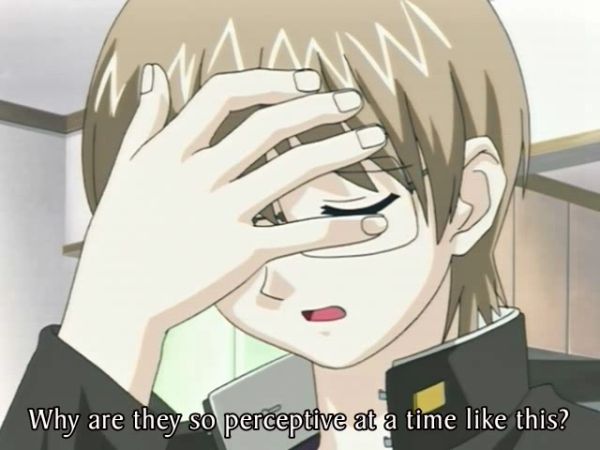
Why are they so perceptive at a time like this?” Because they have read Books of the Truth! But this works a bit differently in this world and my fictional world.

I am still slowly working on the 1001st Book. Vaguely related to the topic of yesterday, but not too directly (because this is fiction, and for teens and tweens mainly). It seems obvious to me that those wizards who have absorbed a particular book, and has the sigil inside themselves, are also able to recognize the same sigil in other wizards. More widely, they can recognize that topic anywhere.

For instance, the 1002nd book is by ancient tradition the Way of Truth. (The complete works of Thoth are collectively referred to as “Books of Truth”, which may be why it is called Way instead of Book, unlike for instance the Book of Light and the Book of Air which describe the true nature of those two things in general, and so on.)  Anyway, once the Wizard has absorbed the book sufficiently, he will be able to recognize truth wherever he sees it. And likewise when he sees deviation from the truth, he will notice this, and to some extent what is missing or exaggerated or otherwise just not right.

Anyway, it is a pretty classical magic thing, I guess, the supernatural ability wizards have to evaluate each other. So it is only natural that I weave it into the story. That there happens to be something vaguely similar in the world in which I live does not hurt, but it is certainly not autobiography I write this time. Despite the lack of actual sex. When writing about teenagers, that is probably going to seem less likely than the magic to some. But miracles do happen!


Spiritual centering and centrifuges

“Unrest within the heart” – that is something I know from personal experience! Like from spending too much time and thoughts on computer games, social networks and other outward things.

In my previous entry, about a social computer game, I mentioned that it had a centrifugal effect: Pulling the mind outward from its spiritual center toward peripheral things, outward things, shallow things. That is a pretty harsh drawback to anything, really… if you are into centering in the first place. It would seem that a lot of people are not.

Boris Mouravieff seems to have held the view that about half the population does not have a spiritual soul. This is not defined by race or gender or some such, but a separate property of the soul. Or lack thereof, so to speak. I doubt it works quite like that, but it certainly seems that some people are utterly immune to spirituality. Not necessarily the rabid atheists: If anything, their opposition could be due to feeling the threat of  conversion, much like people who react strongly negative to homosexuality are found to be somewhat excitable by such things, and sometimes switch sides at a later time.

But there are people who just don’t get it. They have an absolute conviction that there is no “in there” in there, no spirit or soul, that they are obviously meat and this is how things should be.  In a way, they are better off than those of us who keep struggling to wake up, and then fall asleep again without ever getting out of bed. I mean metaphorically, as in spiritual awakening, but it probably doesn’t help that I have had this tendency in physical life as well…

But the great saints, sages, gurus etc seem to agree that God (or Heaven or the Higher Self or whatever is really important) is always “in there”, and that over time a kind of center of gravity develops and grows stronger. The inner world, which at first seemed like a small thing, turns out eventually to be greater than the outer.

I should specify that by “inner world” I do not mean the imaginary world of daydreams or fantasies, although in its own way these too are signs that the human mind is not merely a computer. But the spiritual center is different and indeed opposite from the fantasies of the mind. These, too, are centrifugal: Pulling us outward and away from our true home inside.

To return to this inner home (in wordless prayer or meditation or just a simple willing act of the soul) is  a wonderful feeling, sweet and pleasurable to such a degree that it will often spill over onto the body’s senses, perhaps giving us goosebumps or a sense of pleasure (that is quite distinct from sexual pleasure, if anyone wondered). I believe it is similar to the feeling of a child being caught up in the embrace of a loving parent – but to be honest, I cannot remember such a thing from my own life.

Ironically, I have found that it is mainly the return there which gives such a pleasure. Staying there for some length of time does not, at least for me. I have not seen anyone else write about that particular aspect yet, but I cannot help but notice the similarity to Jesus’ story of the prodigal son. When he returned, there was partying, but his brother who had always stayed there, in his Father’s house, did not get such a party. That is not to say that he had drawn the shortest straw, for his Father said to him: “My child! You are always with me, and all that I have belongs to you.”

At first, the gravity of this inner center is quite weak, at least for most of us who have it at all. But it can grow over time. And as I mentioned a few years ago, the presence of people with a strong inner gravity can help strengthen our own, perhaps more than anything else. (Or perhaps prayer and meditation is more effective, I am honestly not sure though. In the beginning at least I think the presence of others is the most efficient.) This may sound counter-intuitive: If they have a strong inner gravity, would not that pull me outward from my own center and toward theirs?

The misunderstanding lies in the very fact that we can only speak of this in parables. It is not actual Newtonian gravity (although I am quite sure Newton had it, and in spades). We just use gravity as a way to illustrate or make it easier to recognize this when it happens to you. In reality, the center of gravity inside another is also the center of gravity inside yourself!  All is one, one is all.  So that is why their very presence pulls you into yourself, into your own heart, where you will find what you long for.

In the absence of such a person – often a saint or guru or bodhisattva – modern man can often find a similar help in the writings of such a person. Even the writings of someone who has left this world can have this effect. We are then touching on an area similar to the reverence for saints, and I believe the two overlap, but I will not go into this today. I will just say what I have experienced to some small degree and heard for truth by better men, that the presence of someone who is grounded in their own spiritual center will help strengthen the same in you. This seems to depend entirely on that other person’s integrity, not their orthodoxy, which may not completely overlap.

In other words, someone may be a master of the study of the correct faith, but their actual presence is of little value. Another may be useless for teaching, or possibly even worse than useless, but their presence radiates a call to turn inward that anyone with a trace of the same calling will feel. Why it is so, I know not.

I probably understand very little of this, so you may want to go to other sources. But I hope something has stirred within you, a feeling of the pull from that other center, that is opposite to the worries and entertainments of the world. Me, I am still kind of suspended between them, but I believe the interior castle is still growing. If I am given time, I now have hope that I may have a home there that will never be rocked by the strongest storm, even – I hope – the one that will one day blow out the candle of my earthly life.

I hope that is still far off, though.
 

City of Wonder on Google+

All those shield symbols are basically “click me” signs. To move in more people, or get more imaginary money, you click on the corresponding sign, then wait. Or go do something useful, I suppose.

We interrupt everything to write about the game that has interrupted everything: City of Wonder on Google+. Not in any way related to the massive roleplaying game City of Heroes, this is a flash-based (I think it is flash) game played in a browser window. It is also very heavily inspired by Sid Meier’s Civilization series, except you can only play one city and eventually one colony.

CoW has existed for Facebook for a while, but I don’t play Facebook games. The security in FB is horribly bad, and the games – even when they are legit – write directly to your main output stream, cluttering up the Facebook experience for those who are your friend there for other reasons. (Except those who use the mobile Facebook app, at least Android does not show game messages. Luckily this is where most of my Facebook time is spent. Nearly all of it, actually.)

The Google+ version does not have that kind of privileges. Google has a separate gaming tab, which you need never open in your life if you are not that type. All messages written by games go in that one tab. Of course, the game will inspire the less spiritually developed players to write to their stream themselves. If they are not outright dumb, however, they can create a separate circle for their fellow gamers and restrict their game comments to that. I use that only for meta comments however, like explaining certain game features. Any projects or bonuses are automatically written to the game tab by the system, so I don’t write them elsewhere.

Social games is a way to share a tiny speck of symbolic love with people, so I consider it a good thing overall and will probably continue to use it. But it is also a very centrifugal activity – pulling the mind outward, out from its spiritual center of gravity – so I don’t think it will have any large place in my life as I continue my transition from shallow to less shallow.

***

Since I don’t have a lot of gamer friends these days, I went to the website of Playdom (who makes the game) and found a forum dedicated to their Google+ version.  Here was a tread for people looking for more allies, so I added a couple dozen of these to my Google+ account and invited them into the game. I am not sure if there is an upper limit, but I am probably far from it if so. Even so, the last three or four people I invited don’t show up on my pending list. And there are some who are still pending, but I suppose they will check up on the game when they return to work on Monday morning! :p

Having many allies is not strictly necessary to play the game, but having a certain number of them is necessary to unlock some game features, like wonders of the world and expanding the boundaries of your city. You can pay cash instead though.

Helping your allies (or anyone else, actually) build their wonders will give you a reward of 500 silver, so this can be a healthy contribution to your economy in the early game. It costs nothing except a couple clicks, and hopefully makes the other people happy. You can only help this way 30 times a day, though.

Allies get the opportunity to build embassies in each other’s cities for free. You can visit an embassy each day for a small coin reward (it increases over time), and usually get the chance to click a dumb help scenario to earn a couple hundred more coins. (Like help an old lady across the street.) You can actually visit several times a day and do the help clicks, but the embassy needs 18 hours to recharge. If you stay online for a long time – like ten minutes or more – there is a chance that the game will offer you the opportunity to go to an allied capital for a guaranteed help-click.

Conflict with other cities is voluntary and comes in three flavors. You can attack with your military (actual battles not shown), trade or initiate cultural exchange. Cultural exchange will give you XP (experience points) if you win, or cost you a small amount of silver coins if you lose. XP is what makes your city level up and eventually unlock new discoveries, so it seems like the obvious choice. That was one of my early mistakes in the game.

You see,  leveling up also determines the level of competitors you get to compete with. (Your allies are not among them, otherwise they are random.) If you are level 4, your competitors will be level 3, 4 or 5.  If you level up rapidly, you simply don’t have the number of cultural buildings to win a contest reliably. Also, cultural buildings are not the only deciding factor in a contest. The total population also counts (as it also does in trade and battle), as does the number of allies. (Although the allies don’t seem to help much, strangely.)

As a winning strategy, it may be better to level up more slowly. Generally buildings or productions that require more clicking also give more XP, so it may be better to buy houses that you only click once or twice a day. This goes for markets as well: They give a bonus XP each time you click on them. If you want to level up fast, you should choose production that is finished in 5 minutes, but a more balanced approach would be visiting only a few times a day, at most, and get less XP.

Of course, you will eventually want to level up when you begin to run out of technologies at your current level, but that would require a pretty lazy play style.

The main point of the game, however, as I see it, is helping random people solve their imaginary problems. Your values may vary.

More imaginary magic books

There is no end to the writing of books!

I recently wrote about my latest fiction project, tentatively called The 1001st Book. It is based on an ancient archetype of the wizard as a person who has first and foremost knowledge. In modern role-playing games and many fantasy novels, being a mage is something you are born to. You still need to memorize spells in some cases, but that is pretty much it. That is not how it used to be! In times of old, the wizard was both feared and respected, not just for his power but for his knowledge. The wizard was old and, well, wizened. A long life of poring over esoteric tomes had given him an uncanny knowledge of things beyond mortal ken.

I have realized in retrospect that what I am trying to do is modernize this archetype. And I try to do so by starting at the point where the wizard diverges from the ordinary people, the “muggles” or whatever they are called these days. This happens when he first begins studying esoteric books: Books of hidden knowledge, but usually hidden in plain sight.

Not to get excessively autobiographical here, but I dabble in esoteric books myself, and I can see how this would generally require some maturity to even get started.

Another influence on this particular piece of fiction is the Japanese new religion Happy Science and the valiant attempts by its founder to make religious knowledge available for people of average intelligence or even a little below. I recently saw (in a computer game, of all places) theology explained this way: “It’s like religion, but with more deep-thoughtiness.” It is this deeper thinking that is glaringly absent in most religious people you will hear of, and probably also most you will meet. They have some basic knowledge, but they don’t have a deep, wide understanding.

But this story is not about theology or Happy Science. Rather it points back to the traditional wizard archetype, where esoteric knowledge spilled over into the physical world, a literal understanding of “knowledge is power”. It was thought that a wizard could command various spirits, or knew hidden properties of plants or stones or animals, or could consult the stars. By combining diverse parts of this wide-ranging knowledge, he could accomplish things that seemed miraculous to ordinary people.

In The 1001st Book, each of the 20 000 Books of Truth contain just one arcane sigil. The rest of each book explains the concept which the sigil represents, the true knowledge associated with it, and its place in the grand scheme of things. While the lines drawn to shape the sigil are indeed memorized, the rest of the tome has to be understood. It is a process of cognition and cogitation, so to speak. You have to understand it and think about it. Only when you have fully understood the concept and its implications, can you use the sigil – an ancient word for “seal”, see Latin “sigillum Sanctum”, holy seal. (Possibly also Hebrew “segulah”, meaning an esoteric component or some such.) For the purpose of this fiction, we shall assume that the sigil is the seal on the knowledge of the book: It sums up and represents the deep and wide understanding the reader has acquired.

Needless to say, the power of this knowledge increases as you add more books, and become able to see the connections between all kinds of things. It does not just add up, it multiplies, because you can combine them in all kinds of interesting ways.

So how do you stay alive long enough to read hundreds or even thousands of heavy tomes? Ancient portrayals of wizards usually showed them as very ancient, and it was assumed that their art kept them alive. In my story, I have a somewhat more straightforward explanation: The Gift of Thoth, as it is called by the locals, comes from the fact that the magician does not age while occupied with the Art. Whether studying on the tomes, meditating on the sublime Truth learned in them, or actually using the Art in practice, the magician is in a state of  “otherness”, in which the mind is under the sway of the Spirit World rather than the material world.

This is an extension of a topic I wrote about (non-fiction, to the best of my knowledge) recently: That certain activities seem to prolong your life by about as much as you spend on them. In real life, religious participation and meditation seem to be among these. So it is no big leap of imagination to extend this to study of Books of Truth.

As for the actual scenes, these often come while I take a walk. This is the usual for me and fiction. The best length seems to be 10-20 minutes. Much less and I don’t have time for a full scene to form in my head. More, and my brain buffer overflows and I have to repeat the text I have written in my head so it doesn’t disappear. (It still changes a bit when I write it down, but usually is still recognizable.)

I know I have written before about walking and getting fiction “revelations”, but it still works that way, and it may be useful for whoever is reading this. It is unlikely that anyone would read this far unless they are into fiction writing themselves, right?

Opposite of starvation

Which of these represent the opposite of starvation? Sim-Magnus or the imaginary sim-Tuva? The answer may surprise you.

I first wanted to call this entry “anti-starvation”, but that sounds like a humanitarian organization.

I have a few times mentioned my own brush with starvation in 2005. It was certainly not in the developing country manner, but rather a medical situation that led me to steadily lose weight until my body started to adapt to the lack of food in several ways. The most obvious was perhaps the way it influenced my mind, with a kind of chronic hunger, which continued even after eating. There were other changes as well, and one of them may ironically have resulted in its opposite, which is the topic of today.

The opposite of starvation is probably the complex state of health often called “metabolic syndrome”. Actually the professional usage of this phrase may be a bit more precise. But as I am now in a state of pre-diabetes, a still mostly harmless form of the syndrome, I cannot help but notice the parallels.

When starving, my brain stem was hungry even when my stomach was full. I wanted to just keep eating, even though reason convinced me that I would just get sick. Now, it is the other way around: My stomach is bullying me to eat by the unpleasant gnawing feeling, but my brain stem would rather that I didn’t. I feel fed even when I wake up in the morning.  And rightly so.

***

Yesterday a couple hours after lunch I took a fairly long walk that burned 800 calories.  OK, I would probably have burned 100 of them even if I stayed at home, but anyway. I didn’t eat anything when I came home, because I had a doctor appointment next day and was told to fast the night before. So I went to bed, and woke up the next morning feeling completely restored. I could have taken another walk till my legs grew stiff, and probably another and another if I rested a while in between. I was not hungry at all, until my stomach began gnawing.  And my brain stem was right, while my stomach was wrong: My fasting blood sugar was 6.1 mmol. Not sure what that is in American measures, but the recommended upper limit is 6 mmol, and in some publications 5.8. So despite being physically active, I am still pre-diabetic. In fact, it seems that my body has decided 6.1 is the new standard (it was the same last time too), which it returns to after exercise.

This is in theory good news.  Not having to eat is money saved, right? Unfortunately the stomach disagrees. I am still experimenting to find ways to keep it from pestering me. I guess the best I can do is to just keep stopping before I am full, and hope that it will gradually learn to expect smaller and smaller portions.

Feeling over-fed by a small meal is certainly less unplesant than feeling hungry after a big one, so I can see why people just keep forging ahead until they get diabetes, hypertension and atherosclerosis. After all, we are programmed by our instincts to avoid starvation if possible. The safeguards on the opposite side are not nearly as formidable. But they are there, if you pay attention. And if you have tried both, you may recognize the opposite of starvation simply by listening to your own body, even before you hear it from your doctor.

***

I mentioned that the near-starvation may have somehow triggered its opposite. The body is known to do unusual things when facing unusual situations. And this is unusual indeed: Before the illness began at Easter 2005, I used to weigh close to 95 kg. (One kg is roughly 2 pounds, but not exactly.) This seemed to be a practical upper limit, as I stayed close to it for a decade or more perhaps. Occasionally I would dip down to 93, but usually I was in the 94-95 interval.

Now the limit seems to be at 88. That is good, right? No, actually, it is not that simple. When I was 95, the fat was distributed differently. I had a larger paunch (gut bulge), true, but I also had permanent fat deposits on my backside and thighs. Not enough to compete with your average housewife, of course, but plenty for a man and pretty obvious when looking back at some of the pictures from around the turn of the century. This kind of fat is harmless, possibly even healthy. It is only released in case of starvation.

And of course that was what happened, even if it went no further than that. No matchstick arms and protruding ribs and all that. But my body fat was gone. And when it returned, it did not return to where it had been. Now it is almost completely concentrated around my kidneys and thereabout. This type of fat, which is more common in men than in women, can be released very quickly to the bloodstream. It does not even take hunger, just stress.  Get angry or afraid, and delicious fat pours into the blood, ready to fuel your battle.

I consider this a poor exchange for my built-in sitting pillow. But this is the kind of thing that could happen if you are successful with your dieting. Luckily, most people give up after losing about 5% of their body mass in fat, so the effect on their body is quite limited. I will probably be one of them if I decide to lose weight at all. The doctor recommends it, although he is satisfied as long as I don’t gain weight, and stay physically active.  The irony is that I am not visibly “fat” at all. I don’t have the other symptoms of metabolic syndrome either, but if I had not convinced my body that it was starving, I might have been fatter and still healthier.


Sex-starved writer

There would be impure thoughts everywhere!” Even in my fiction, I’m afraid.

I had a scene for my latest story written in my head, more or less, but I refrained from writing it down today. I feared, almost certainly with good reason, that it was influenced by the general high tide of sexual consciousness that has been in my life the last couple days.

Even though I am over 50 and quite comfortable with my celibacy, the body-mind seems to have its own tides and times when it comes to sexuality. This is a more general atmosphere. It is not like I actually go out and buy drinks for lonely women in the hope of sexual favors, or indeed go out at all. But there is rather a general hunger for physical intimacy (to use a somewhat flattering but not quite misleading name). Or perhaps more starvation than hunger, in a certain sense.

I do not have experience with starvation in the East African sense, I am happy to say. But after a virus destroyed my ability to digest (or possibly metabolize) fat except in small quantities, it took my body several months to rebuild my digeston to live off carbs instead. During 9 months I kept losing weight, until I was a “thin client” indeed, as my coworkers joked. (Thin client is a kind of computers we used in our line of work.) Having lost my fat reserves, my body reacted with a different form of hunger.  You may think starvation is an extreme degree of hunger, but that is not really true. If you go a couple days without eating, you will probably experience an extreme degree of hunger. After a while, the stomach stops screaming for food, leaving only a dull ache.  Starvation is a hunger that permeates your very being. Even after I was able to eat large meals, I felt hungry deep inside. Before eating, during the meal, even afterwards when my stomach was so full that I more than half wished I could throw up. It was a hunger that came from the brain stem, not from the stomach. Ever present, until my body had recovered a ways.

The high tides of sexuality are like that. It is not something that stops if I wake up from a wet dream in the morning, for instance.  It will recede in its own time, but until then, it colors my perceptions, pulls at my thoughts and my feelings, and of course my body. It is not so much urgent as persistent. That is how it is for me, at those times.

In later years, I have had longer and longer periods of complete freedom from sexual impulses, as if that part of my life was something of the past. Only a couple weeks really at that level, but very enjoyable weeks. But always it comes back. I am not sure whether it is tied to the moon phases (it seemed like it when I was younger, but less so now), or some other kind of internal rhythm. There may also be an element of enantiodromia … whenever there is a strong impulse in your life, there will be countercurrents at best, possibly outright rebellion. It would not surprise me if my recent interest in the life of St Gregory would trigger some kind of active resistance.

Whenever one moves a step forward into contemplation or some related area, it is a safe bet that the mind parasites will stir up distractions. What these are can vary from person to person and over time, ranging from computer games to compulsive gambling to full-blown panic attacks. OK, I actually haven’t tried the compulsive gambling, but it is a classic example. I assume this could be something along the same line.

In any case, it is sure to be temporary. And in the meantime, I have to be very careful about what I write, whether fiction or otherwise. I have read some fiction where it is painfully obvious where in the book the writer has gone through a horny phase. I like to think that in my current story, what little flirty banter there is would actually be a natural part of the situation. But just to be sure, I won’t let my characters out more than necessary until this has blown over.  And the same should probably apply to some of my non-fiction.

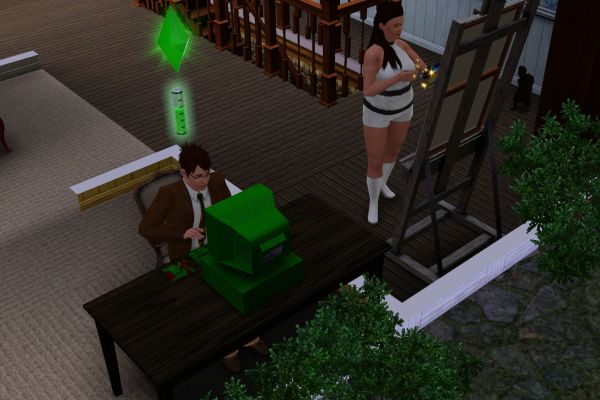
In the computer game The Sims 3, sims with the personality trait Good have the option to donate to various good causes, exchanging some money against 24 hours of some extra happiness. One of the options is “Donate to Starving writers.” In the case of sex-starved writers, however, I think it is better for all involved if you don’t donate pictures of an explicit nature, as has happened (very rarely) in the past with overly helpful online friends.  Chick pics with beaks are OK though – I am not that starved!


In praise of negative thinking

A little too literally translated, I think. How about “It is all my fault, and only my fault!”

In my circles at least, “positive thinking” is accepted as a good thing. It is believed that some mysterious “law of attraction” will bring you the positive things you think of.

I, on the other hand, have found negative thinking to be quite useful. Not negative thoughts about others, but about myself.

You may want to skip this if you are vulnerable to depression, either from your personal history or family. Although I personally don’t find it depressing, but who knows. I am not you.

***

What I mean by negative thinking is not a vague and general feeling that “you can never do anything right”, “you’ll never amount to anything” or the more hardcore “why don’t you just die”. That’s not how the thoughts in my head go. I am not quite sure how much this comes from your parents speaking to you as a small child, or whether it is a biological tendency or even a spiritual one. In any case it is unfounded, as anyone can achieve at least something in the future if they choose to stay there.

No, what I call “automisanthropology”, the study of why I of all people am up to no good, is more concrete. Why did I make that careless mistake? Why didn’t I do anything while I still could? Why did I wait for someone else to help? Why didn’t I learn from last time I was in the same situation? Why did I think my own whims or wishes were more important than the needs of another? Why did I forget what I had promised to remember? And so on and on.

There is, I guess, an underlying optimism that allows me to think like this. An assumption that I could have done better, that at some point I will learn from my mistakes, that there is a fundamental will to do the right thing, deep down. Very deep down. Extremely deep down. That “original sin” is not the true original, but smeared across something even deeper, more primordial: The primordial spark of Light by which we can even receive Light. Even if that spark is no bigger than a mustard seed right now.

But exactly for this reason, I don’t hold back when I talk to myself. I tell it as I see it, and it is not pretty. I don’t want to just forget and put it behind me. I want to learn and change, even if it takes seventy times seven tries. I am not fine. I am not OK. I may have that potential, but mistakes were made, and by me. If I excuse myself, I will never change. And I must change. That is why I live, isn’t it? Not just to avoid death as long as possible, although I’d rather do that too, but to become more me, more the me I want or aspire to be.

And when has blaming others ever made anyone improve in any way?