Food consciousness

Having a spare stomach for cake, dessert etc is actually quite common. How does this work?

What I reveal today is a truth that can change lives and even make life much longer and more enjoyable for many. Even if you don’t need it, bookmark this or save it, print it, and share it with a friend. Or better yet, understand it so deeply that you can tell them in your own words. But if not, printing is OK. In fact, I explicitly allow you to copy this to your own website.

Science tells us that only about 5% of those who lose weight through diets, actually keep the weight off. I hope these numbers are adjusted for those who in the meantime have taken up smoking, or got some chronic illness to their digestion, or changed to a physically demanding job. Because if not, the number would be around 0%.

Another scientific fact is as least as puzzling: Different diets give roughly the same results, even opposite diets. So if you pick a high-fat, low-carbs diet and your identical twin picks a low-fat high-carbs diet, you are likely to lose weight at around the same rate.

It gets better. One of the most effective “diets” has actually nothing to do with what you eat. Eating in front of a mirror is one of the surest ways to return to a healthy weight for those who are prone to overeating. A more time consuming but less insane looking alternative is a food diary, as detailed as possible, including all meals and all snacks. There is no need to restrain yourself, just make sure to never eat anything without writing it down.

A final piece of this puzzle: Studies show that people who eat in front of the computer or the TV (if it is on) eat about twice as much as if eating in the kitchen or dining room.

I actually had the privilege of seeing this in action when visiting a highly intelligent friend once. He devoured a bag of chips on front of the TV, and later that night accused his daughter of having taken it. Needless to say, this man lived a constant “battle of the bulge” over his belt.

But I have seen a much worse case. I worked for over a year at an institution for alcoholics. One of the patients had for some reason drunk methanol instead of ethanol some years earlier, and blown his long-term memory. He could hold a reasonably sane conversation, as he could remember the last minute or so. But what happened and hour ago was left to his imagination. This included any meals he had eaten and not just recently finished. So he would eat them again. Any attempts to convince him otherwise were ignored.

We imagine that the feeling of being fed comes from the physical pressure or weight of the food in our stomach, but this is only for the first minutes after a large meal. Pretty soon the contentment actually comes from the brain. The level of blood sugar does signal a recent meal, but that does not last long, and may soon turn worse than nothing. At that point, your subconscious uses your memory to determine how fed you are. This fact completes the puzzle. The picture is now clear.

The higher your “food consciousness”, the more precise your appetite.

In the past, food was a scarce resource. Eating was not something you did to while away the time, or because you had your hands free. Filling your stomach was an occasion of joy, and surrounded by ritual. Thanks were given to the spirits, all of the family was together (and in earlier times often the whole clan or village in case of a large feast). Everyone knew that eating your fill was not a basic human condition like breathing. It was something worthy of notice.

The human operation system still works the same way as in that not so distant past. But these days, food is often beneath notice. It is eaten alone while we read through the latest report from management. And so, like in the unfortunate alcoholic I mentioned, the meal never quite enters long-term memory.

When you start a new diet, you pay a lot of attention to your eating. By chance, you somewhat duplicate the conditions of the past, and your body and mind become aligned. But after a while the awareness fades, and your brain goes “What food? I don’t remember any food” and so you eat again.

Yes, there are certain illnesses that severely warp the metabolism and make a person prone to obesity (or the opposite). But they do not count in the tens of millions in one country alone! These things are more like people being born with fur or an unusual number of fingers. Diets are unlikely to have much influence in such a case, I fear. But for the normal human, raising food consciousness to its natural level is definitely worth a try.  Especially when the alternative so often is to live hungry or die early.

As a final note, I feel obliged to mention that the body is in any case a temporary dwelling, and we would be well advised to raise other forms of consciousness to a higher level than that of our food. But those who want to hear that can hear about it another day, or somewhere else. Take this for today.

What the Hell am I doing?

“What do you think about this amount?” -I think it is eerily similar to my amount of superhero comics before I left the original Chaos Node.

I stopped by my comic book dealer (who also happens to be the used book store in Kristiansand). I fetched the two issues of Savage Dragon that were lying for me, and asked him to discontinue my subscription. I have quit the other comic book series as they closed down (and usually came back with a different name and different artists, but without me buying them). But this Larsen fellow just keeps ticking like the energizer bunny, it seems. So I gave up and told the shop to just cut it.

“I no longer see the point in reading about people bashing their heads with cars” I explained. “You should have realized that long ago” said the shopkeeper. “Why didn’t you read something more edifying?”

Why the Hell not? thought I, and as always when I use that phrase, I mean it in its religious sense. The shopkeeper continued talking about a local soccer hero who recently died at a fairly old age, and was praised by the local newspaper for soccer being his life until the very last. “Running after a ball is natural when you are a small kid, as long as it is just one of several games you play. But even then, something is wrong if soccer is all you play. And to keep being hung up on this for the rest of your life??”

Indeed. If some other person had been forced to spend his whole life doing nothing but soccer, seeing nothing but soccer, talking about nothing but soccer, wouldn’t he be in Hell? Not because soccer is omg so wrong, but because of the confinement and the stagnation – being essentially trapped in a small corner of a normal childhood for the rest of the life.

Ever since I read Ryuho Okawa’s view of Hell as something humans create rather than something God creates for them, it has seemed obvious to me that people are not actually thrown screaming and protesting into Hell by  hard-faced angels on the command of an angry God. Rather, Hell is something we gravitate toward. There is, so to speak, a mutual attraction between the sinner and his Hell.  Just recently I saw Rabbi Adin Steinsaltz imply something similar in his book The Thirteen Petalled Rose, and a quote from Jennifer Upton’s Dark Way to Paradise about Dante’s Divine Comedy also implying the same thing. Perhaps I am just selectively reading people who tell me what I want to hear, although this is a bit strange when I have not heard about them before. In any case, back to my comic books.

The difference between me and the soccer hero, apart from me not being a hero at all, is that I have only been partially imprisoned in a corner of my childhood.  I have tried to think about this. I have spent thousands on superhero comic books during my adult life, until my late 40es. Why the Hell did it not fall away before? It is after all not a biological urge… one can understand single men who buy porn (although I would think a couple porn mags should be enough for a lifetime, I mean, how many fetishes does one person have? – but what do I know.) Or even women who buy cook books. The body has its urges. But the urge to have cars thrown on you by angry supervillains is probably not one of them.

Looking back, I wonder if this did not start fading away around the time I wrote the series of gray entries about The Next Big Thing. At this point, I saw superhero comics as a symbol, an upwelling from the collective subconscious of the expectation that a new type of human was about to replace ordinary humanity. While the real “human version 3” will probably not be able to fly by willpower or shoot energy beams for their eyes, their thinking will be as far removed from that of current humans as superpowers would be from our physical abilities.

So as long as I remained ignorant, I remained enslaved. Reading superhero comics was in a certain sense a meaningful impulse, diverted into a symbolic form that is not exactly counterproductive, but unproductive.

In a similar way, I believe, the attraction of computer games is that they allow us to quickly do what we feel we want to be doing but cannot. In my case, guiding people to prosperity, peace of mind and lasting happiness (The Sims 2 and 3), or protecting the innocent from evil (City of Heroes). Unless I learn how to actually do these things in real life, I will probably remain attracted to these games until I die… and quite possibly beyond.

That is a chilling thought, right? But now you have to excuse me, the Double XP Weekend has begun in City of Heroes. It is time for Bright Hand of the Sun to protect his fellow heroes from the forces of Darkness!

Forum trolls

One way to keep the level of online aggression down is to make the place more girlfriendly. But that is not always an option.

In the online world, there is an unpleasant and common thing called “forum trolls”. These are people who take part in discussions in order to enrage others. In the wider sense, any discussion forum could have trolls, even mailing lists and of course good old Usenet, for those who remember that. Blog comment sections are not spared either, although the blog authors usually clean up the mess when they check in.

What is the cause of this phenomenon, and what can we do to diminish it? Clearly most people would like to see less or none of it. Right?

Here is an article by Clay Shirky in Harward Business Review: Cleaning Up Online Conversation. He argues that there are mainly two factors that promotes trolling: Size (large chance of being seen) and anonymity (small change of having it come back to bite you).  By making forums more specific, encouraging identity, and giving ordinary users the power to bury the idiot comments, the problem can be greatly diminished. Examples of successful forums are given.

I would add that one alternative is to attract a different audience. For instance, nobody could start a flame war on the Project Meditation forum. The regulars and all but the greenest of visitors belong to the five-dimensional Realm of the Good or above. If you behave like an asshat, they will behave like an arhat in return. They will pity you and try to help you. This is because of the big difference in the level of understanding and purpose. A teacher will not quarrel with a grade school pupil, and a doctor will not quarrel with a patient. People whose purpose in life is to be healers of souls, will not be enraged when they see sick souls.

If a place is clean and well lit, roaches are unlikely to be much of a problem. Even should they show up, they cannot stay in such a place.

Of course, this is not really an option for most forums on the Internet. Yet. But when we have built a civilization that can stand the test of time, a Golden Age, a New Enlightenment, then perhaps this will be the rule. Until then, we shall have to just extend the light what little we can, each of us seeking to shine brightly for the benefit of all around us.

Depth of meditation

Is that a box of Holosync CDs? We live in an age where advanced technology is sometimes indistinguishable from magic, but is it black magic or white magic? Is it contrary to first principles, or working along with them?

I revisited the Holosync Demo tonight. Back when Gaia – formerly Zaadz – was still alive but oh so slowly changing into a pure spam machine, they sent out a semi-advertising recommendation for this demo. They both belonged to the same “commercial New Age” arena. Gaia went under, Holosync is still thriving, and still spamming all kinds of products for their friends. Products you won’t need if their own product does what it says.

Be that as it may, I was reminded once again of their claim that the binaural technology can “meditate you”, that it can make you enter into a state of meditation deeper than that of an accomplished Zen monk. As measured by EEG waves, that is actually true.  If you close your eyes, listen to their soundscape and go with the flow, you should eventually end up with a huge proportion of delta waves in your brain, which is nearly impossible to achieve through meditation.  Or indeed in any other way except deep sleep.

It is also generally true that people who have meditated for many years and mastered advanced techniques, are able to slow down their brain waves to a deeper level than beginners.  Usually you can only reach alpha waves the first years, but eventually you can master techniques that produce theta waves, which are rarely dominant in waking states (although they appear partially – we rarely ever have one frequency completely filling the whole skull).

Now, the fallacy is to think that slow brain waves are the goal or purpose of meditation.  This may be the case in some scientific studies, but not in the established schools of meditation.  Usually meditation is part of a religious practice. Regular meditation is meant to transform the personality. And the whole “regular” thing and the patience involved is essential. It is a form of self discipline.  To bypass this is to render the whole exercise meaningless. It is like running marathon on a motorbike.  Sure, you get to the goal faster, but that was not the point!

There are various benefits, particularly to the health, of brainwave entrainment. I am still positive to it and I still use it (mostly LifeFlow now). But it does not meditate you.  And as I’ve said before, for religious meditation I have found it better to avoid brainwave entrainment. Your religion may vary, if any.  But the depth of meditation spiritually speaking is a different quality than mere brain waves.

Such is the world we live in, that quality is often reduced to quantity. I love living in this time and age, but in that regard it really is a “Kali Yuga”, an age of degradation, a barbarian age, an age of spiritual death. Love is reduced to hormones and hope to medical reforms. But such a thinking hurts the human soul. Flee while you can. The reduction of wholeness to parts is the essence of death, as the Buddha said in his last words:  “All things that are made of parts will come apart. Strive diligently!”

Memories of tomorrow

When something weird is going on, the best thing to do is ask somebody weird!  But I am not sure I have anybody weirder than myself to ask…

Can what we read tomorrow influence what we write today?

Yesterday I wrote an entry about how things had become better and better not just in America but most of the world. This morning, I got a mail from Questia, the online library, graciously allowing me to read for free a book by Sthephen Moore and Julian Simon, called It’s getting better all the time. The book details 100 ways in which the 20th century was a great improvement on all centuries past. From the little I have had time to read of it, it argues that this is indeed the best of times.

Now, it’s not like I did not know that already. Furthermore, the book is published by the Cato institute, with whom I am already on moderately friendly terms (as in, not mocking them on sight).

Still, the placement in time is vaguely disturbing, don’t you think? If I had published that essay today instead of yesterday, it would certainly have looked like the book was an inspiration, if not outright cause of my writing.

I wonder sometimes. The fact that we cannot remember the future, does that necessarily also imply that we cannot act on it subconsciously? I have given you several striking examples over the last ten years, such as the time I wandered into the computer shop and asked about an external hard disk hours before my existing disk suddenly died.  I noticed even as I was talking to the shop guy that I had no idea why I was there and doing what I did. Yesterday I felt a sudden surge of inspiration, but there was no external event that caused it.  Well, at least not until this morning.

I have said before that I view this similar to magnets and small iron objects. Usually the magnet will pull a needle toward it but will itself not be moved. But occasionally the magnet is on a tipping point and may be drawn toward a much smaller object by the same force.  Perhaps time is the same.

Of course, there could be other explanations that don’t defy common sense. For instance, maybe I took a particular interest in the book because I had just written about the same subject, whereas normally I would have thought “that looks vaguely interesting but I have other things to do” and quickly forgotten it. Yeah. That would explain it…

Except…

That first part of the entry which is not quite so upbeat?  Early this morning I received the following quote on Twitter: “Real gratitude must be expressed in a more positive way, by asking yourself what you can do to help others ~ Ryuho Okawa”.  Why do I get a tweet about that after I write about gratitude in that context for the first time in my journal?

No matter how you look at it, that entry would have made perfect sense if I had written it one day later. But I didn’t. Instead, life presents me with the inspiration for it the morning after I upload it. Pretty fascinating.

Carbohydrate gluttony

So good! Eating is a primal pleasure, and these days, when it is no longer regulated by religion, it is still held in check by social taboos and personal complexes.  But not for everyone, I guess…

A few hundred years ago, in the Middle Ages, gluttony was considered one of seven Deadly Sins: A transgression against God and natural order, so heinous that the sinner would go straight to Hell. Those who kept doing such things were thrown out of the church and shunned by good people.  I guess it is kind of like racism today. It is something you just don’t do if you care at all about your soul, or your reputation, or common decency.

Today, people rarely even say grace as they sit down with a double whopper cheese with fries. As in so many ways, objective measures have replaced the commandments of Heaven. Now, the commandment is “Thou Shalt Not Be Fat!”  In the modern mind, it is the life of the body rather than the soul that is in danger, but you still face the threat of excommunication – not from the Church, but from your circle of friends, or at least polite society. (Your friends will generally forgive you if you grow fat at roughly the same rate as they do.)

Now for the “carbohydrate” part. Regular readers may remember that humans really suck at making fat from carbohydrates (or “carbs” as they are known these days – sugars and starches). The only notable exception is fructose (as in “corn sugar”), which can be transformed into fat in the liver. This is a slow process though, and in practice the difference between the carbs rarely matters. Normally we all eat a mixture of carbs, fats and proteins.  In this situation, the body has the foresight to burn most carbs, which are hard to store in the body.  (It can be stored in the liver and muscles as glycogen, but only enough for about a day’s use. Fat, in contrast, can be stored for years.)

Basically, the more you shift the balance of your diet toward carbs, the more your body burns carbs and stores fat.  If you go the other way, eating almost only fat, the body can use fat as a substitute for sugar too. Even the brain can run on fat in a pinch, although it usually uses only sugar.  But during normal life, we burn carbs quickly and fat slowly.

Of course, not all of us are normal. I, for instance, fall ill if I eat more than tiny amounts of fat. But I can eat lots and lots of carbs with no ill effects, or at least none that I can discern. And I don’t become fat. If I eat more sugar than I need, I just burn it off harmlessly, at least as long as it is “real” sugar and not fructose. So unless you actually watch me work my way through the cola, candy and sweet desserts, there is nothing to betray my gluttony.

Today my conscience is pretty good, though. According to my pulse watch, I burned some 1060 calories (kcal in Europe) on shoveling snow and walking to the grocer’s.  That will take its SWEET time gaining back – carbs have only half as much energy as fat, and 1000 calories is quite noticeable: That’s half as much as an average woman burns in a whole day (24 hours). Imagine eating 12 hours’ worth of food extra, and having to avoid anything fatty. No cakes, nothing with cream, no sauces, only tiny specks of chocolate. Do you think you could do it?

Our true nature?


The precious moment when, somehow, we become able to stand outside our own thoughts and look at them. Treasure these moments, for they are where we learn to know this mysterious, unknown person known as “myself”.

See if this does not resonate in your heart, as it did in mine.  “In the spirit world, what a person thinks about or prays for most strongly reveals their true nature. Awakening to this truth will completely turn your life around.”

I have a hard time imagining how it could possibly be otherwise. What else would more clearly reveal our nature?  Certainly not our title or paycheck. Certainly not our house or car. Not even our looks or our health. Probably not our political affiliation or even, in and of itself, what church or temple we go to, if any. But as the Bible says: “For as he thinks in his heart, so is he”.  (Proverbs 23:7.)

If there is a problem with the original statement, it is that it is obvious. “It says itself” as we often say here in Norway. Well of course we are what we think! Really? Then why do appearances mean anything to us at all? Why does it matter what this or that person thinks about us?

If we want to know who we really are, there is no way around observing ourselves as the days go by. What am I thinking about when I am not thinking about anything else? When I am at rest, perhaps before falling asleep at night? When I am waiting in line and the line is slow, where are my thoughts? And what, if anything, do I wish so much to see happen that I am willing to pray for it when no one on Earth sees me?

It appeared to me, that we might imagine we were taken away to a secret place of power, and there ordered to state the deepest wish of our heart.  (Such an event starts one of my unfinished stories, which may be why I can imagine it easily.) Now, if this our greatest wish was to come true, that would certainly be something.  But what is it?  Do we really know that? And is this, our aspiration as it may be called, what we actually think about when waiting for the bus?

Atheism as transitional phenomenon

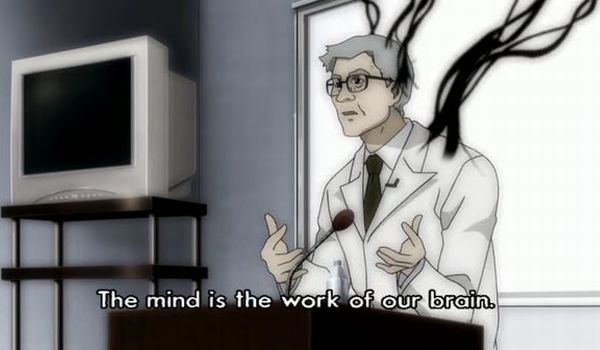
“The mind is the work of our brain” – this theory is currently accepted as truth by most Scandinavians. Viewed generously, this can be likened to saying that “Windows is the work of the computer”. Given the many great realms open to the human mind, however, it is more like saying that air is the work of the lungs or that dry land came into being because the fish evolved legs. But when you don’t have a realistic alternative…

This is not the first time in history that atheism is surging here in Scandinavia. Much the same happened a bit over 1000 years ago, as Christianity was replacing the old Norse religion. According to a saga writer who saw the tail end of that period, many of those who had been brought up in the old religion and saw it discredited, did not latch on to the new. Rather, they “believed only in their own strength”.

This is not hard to understand. If there are a lot of people who don’t believe in Odin and Thor, why should I? But if my ancestors lived for generations without even having heard of the White Christ, why should I bother with him?

It is the same today. For the first time in history, many different religions from various times and places all show up at the same time, and people reasonably think that they can’t all be right, so why should any one of them be right? It seems only logical.

But this logic can also be reduced to the absurd. For the same bringing together of the world has also shown us many languages: Some big, some small, some easy to learn and some quite obscure.  If most people in the world don’t speak my language, why should I?  And why should I adopt another language, if most people don’t even understand it, much less use it? Indeed, when humans can’t agree on a language, why should I speak at all?

Now arguably, you cannot survive without speaking (though some monks might disagree). You can survive without religion. But most people don’t speak merely for their survival, but because it is a genuine expression of human nature.

I have a theory – it is not a revelation, merely a speculation – as to why atheism has surged so much more in northern Europe than in the USA. I believe it comes, this time again, from the sudden transition.

If you remember the theory of Spiral Dynamics, you will know that different people have different levels of complex thinking. What we call higher levels are such that can handle a more complex worldview. This change started rather earlier in the USA and has continued at a gradual pace. The USA has, for instance, still a large “Blue” segment that believes in religious myth in a literal way, and values obedience to authorities with no need for understanding. This is generally considered shamefully primitive in the Nordic countries, where the norm now is to be Green (postmodern) in theory and Orange (capitalist) in practice.

Because the Nordic countries (and the Netherlands) have experienced such a rapid “lift” in complex worldview, it is natural that people find their childhood religion primitive and even caricature-like.  Furthermore, the Nordic countries had very little religious diversity to start with. Each had a national Lutheran church that counted some 95% of the population. In this comfortable near-monopoly, the churches may have seen little point in changing until it was too late, and then mainly by becoming generally permissive, rather than attempting to meet intellectual challenges.

People whose heads are now in the postmodern world have available a religion suitable for the 18th century, with God as an enlightened monarch at best. Not that there is anything wrong with that – for the people who have a worldview to fit.  Like water takes the form and size of the container, so also religion will take the form of the mind in which it is contained. But here the water of religion was frozen in a form badly suited to the postmodern mind. Naturally this led to a wholesale rejection of traditional religion.

Lately, New Age spirituality seems to be growing in this area, presumably as an attempt to fill the religious vacuum. But being vague and mixed with many kinds of superstition, it is unlikely to fill the role of religion. What will, I don’t know yet. But history suggests that humans will naturally return to a religion that fits their level of development.

Euhemerus science

Having seen how awesome King Hermes was, the Greek soldiers decided that he must be a god! Picture from the Japanese animated movie “The Golden Laws”, based on a book by Ryuho Okawa.

There is a theme to my last few posts, and I want to press that point a little more. But to do that, I have to introduce someone with a difficult name: Euhemerus, an ancient Greek. His name means “Happy” or “Prosperous” (or something like that), so there is a pun in today’s headline. Anyway, his name may be difficult to you, but not to the people in the Macedonian court, where he was working.

Macedonia, back then, was where Alexander the Great came from. Alexander inherited a pretty good army from his father, but still, he really did earn that name. He built one of the world’s largest empires over the course of a few years. He died young, and his empire fell apart, but it was still an amazing feat, and it also made communication possible between cultures that had until then been mostly apart.

Old “Happy” lived a generation or so later, so had a most compelling case for the theory that made him famous: That the gods of old were actually men (and women) who had accomplished such great works that people thought they were gods.

We shall bear in mind that Greek polytheism was probably a lot more like Japan’s Shinto religion (which I mentioned in passing yesterday) than Religion in the west today. The border between men and gods was already kind of porous, with heroes and ancient kings being seen as offspring of visiting gods, mainly Zeus. Many of these were considered historical persons, though some are no longer thought to be. In any case, if some of Zeus’ sons were men of great fame, why not the rest of him, and Zeus and his brothers and sisters too?

So was born the theory called “euhemerism”, which claims that gods were once men who got excessive respect, usually after their death. This theory is also found in one of the Jewish apocrypha, still included in some Bibles today. It was also embraced by early Christian thinkers, although after the completion of the New Testament. The phrase “Those who you worship were once men like you” resounded through Christian history, apparently without the slightest irony.

Yes, until recently it could be argued that Jesus Christ was the best documented example of a man being later worshiped as a god, or even as God. While worship of emperors was common in Rome, China and Japan (at the very least), this was a formal, ritual, even political act. It is doubtful that many embraced these men as their personal savior. But Jesus Christ was another matter entirely. Despite his life and death being accepted as historical fact (except for a while during the 19th century), he is mostly famous for his divinity.

Of course, the big difference is that Jesus really was Divine, but some misguided people still can’t seem to understand this…

More locally, the Norse gods were explained as great kings of old by Snorri Sturlason in the early 1200s, and I read his explanation repeatedly when I was a boy. I had no idea until this year that this was called euhemerism, though.

An unexpected twist to this topic comes from the prolific Japanese writer Ryuho Okawa. He claims that the ancient gods of Greece (and Japan, presumably many others as well) were in fact historical characters. He even made an anime about one of them, Hermes, and this movie is still possible to buy on DVD. It was a big hit in Japan, but flopped completely in the USA. “Flew like a turkey” I believe is the local expression.

Okawa’s view is a bit less rationalistic than classical euhemerism. He sees the ancient gods as historical men and women, yes, but they were filled with a spirit from Heaven. They were men and women with a mission from God, and this is why they were venerated after their passing. So he is not entirely dissing their divinity, but they were still mortals. In the tradition of Shinto, he refuses to see gods and mortals as fundamentally different. They are all aspects of the Divine.

Okawa ought to know, if anyone does. Because he is already being worshiped as a god by hundreds of thousands of Japanese, and there are numerous temples dedicated to him. That is one of the things that makes him so interesting: He is a living case of euhemerism in action. Imagine if Zeus had a Twitter account, or Jesus Christ was videotaped during the Sermon on the Mount. Would they still be worshiped centuries after their passing from the world?

Well, Jesus would, of course, since he is just that awesome. But at least he would not be portrayed as an Aryan photo model.

So far, Okawa is doing well too in the being worshiped department, but he is not dead yet. His new religion is called “Happy Science”, and so – by a surely unplanned irony – the circle is closed. Old Euhemerus the scientist would perhaps have been amused.

Magic and genius

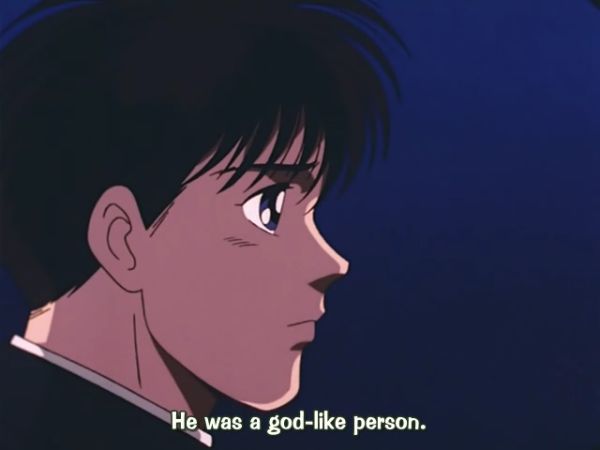
Screenshot from the anime Aoki Densetsu Shoot. “He was a god-like person.” In Japan’s Shinto tradition, the border between the human and the divine is still more porous than here in the West with our centuries of monotheism. So much so that even a soccer player can be seen as divine.

It is not just soccer players, of course. We all have this wonderful magic called life. Somehow, only dimly knowing how, we are able to control our own bodies to a great extent. Some people, through talent and training, are able to control them even better.

I believe without doubt that there is sports genius, just like there is musical genius or chess genius and others. And like with all of these, the genius cannot truly be brought out and made to shine without effort. Hard work through several years. But the thing is, for the genius it is not just hard work. It is something they feel called to, drawn to.

In the anime Aoki Densetsu Shoot, which set off this train of thought, the genius Kubo had a question for all who wanted to join his soccer club: “Do you like soccer?” And those whose eyes lit up when they answered “yes” were the ones who became his team.

Obviously, there was never a time in my life when I could have said that about soccer, or indeed any sport. But when I was young, you could have asked me: “Do you like programming?” and my eyes would have lit up in just the same way. I would practice it when no one was looking. I would read about it, think about it, even dream about it. And that is how, when the chance unexpectedly came, I was able to create a debt collection software suite that helped companies in Norway save millions. I did not earn millions, of course, though I did earn a few thousand for a little while, which I wasted. But that was not why I did it. I did it out of love.

We don’t think of life as magic, but if we came to a world where stones could move and grow, our first impulse would surely be to see it as magic. But because carbon-based structures do this routinely in our world, it is perfectly natural to us. In a similar way, if we had not seen genius before, we would quite likely be astounded and think it was something supernatural. Or at least our ancestors did just that. In the age before books, we did not have access to the many geniuses of the past. So when a great man (it was usually, not quite always, a man) stood up and did something remarkable, people thought that a god had descended on earth and left his seed among us.

Well, I suppose that can happen too, in a very abstract manner of speaking. But my point is that it is just a matter of perspective. We know for certain that our way of seeing things is right, and their is wrong. But what if not? What if genius really is divine and life really is magic? It is not like we can recreate these under controlled circumstances, after all, which is the essence of scientific practice.

Yes, I have also read that some scientists have recently created life. On a closer look, they have assembled DNA and inserted it into an existing cell from which they had removed the original DNA. That is creating life in much the same way as playing with Lego bricks is creating matter. Not that it is not respectable, but we are still a far cry from even understanding life, much like creating an equivalent of it from scratch. And the same is the case with genius, I think.

That is why I don’t have a problem with the notion that a genius is a “high spirit” who has come down from Heaven. It is just a different way of looking at the same thing. We need to see things from different sides. A world in which there are no wonders is not a world fit for human habitation. There is nothing heroic in creating a mental world in which everything is just the random movements of atoms. Such a world has no room for heroes anyway. Those who lose their sense of wonder lose, in a very real sense, their humanity. They become self-professed animals. What has always raised us far above the beast is our imagination. It creates delusions, but it also creates discoveries. It brings forth the madman and the genius. And sometimes the mad genius…

But genius without work is like water running into the sea, disappearing without having done any good. That is why Edison, one of the greatest geniuses of modernity, said that genius was 1% inspiration and 99% transpiration.

I don’t know about you, but sometimes music comes to me. Hauntingly beautiful melodies or even songs, in languages known or unknown, songs that I have never heard before and never hear again. If I were a composer, I could grasp those melodies and bind them to ink and irrigate the world with their beauty. But I am not, and so after a while they join the river Lethe and return to the endless ocean from which they may have come. I sometimes wonder if this happens to almost everyone, most people, or just a few. But it does not matter, I guess. I never felt a call to be a composer. If you asked me: “Do you really like music?” my eyes would not have lit up.